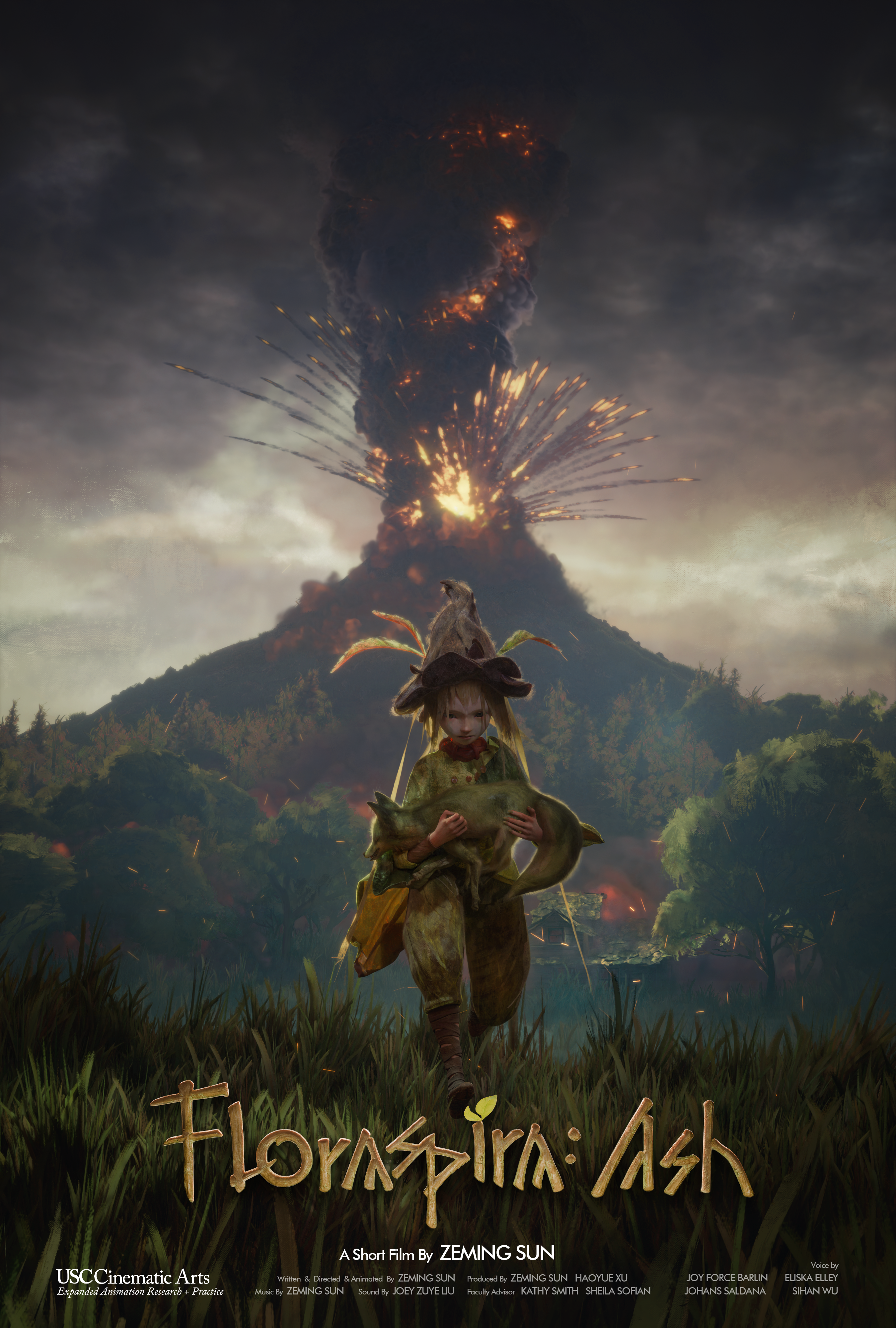
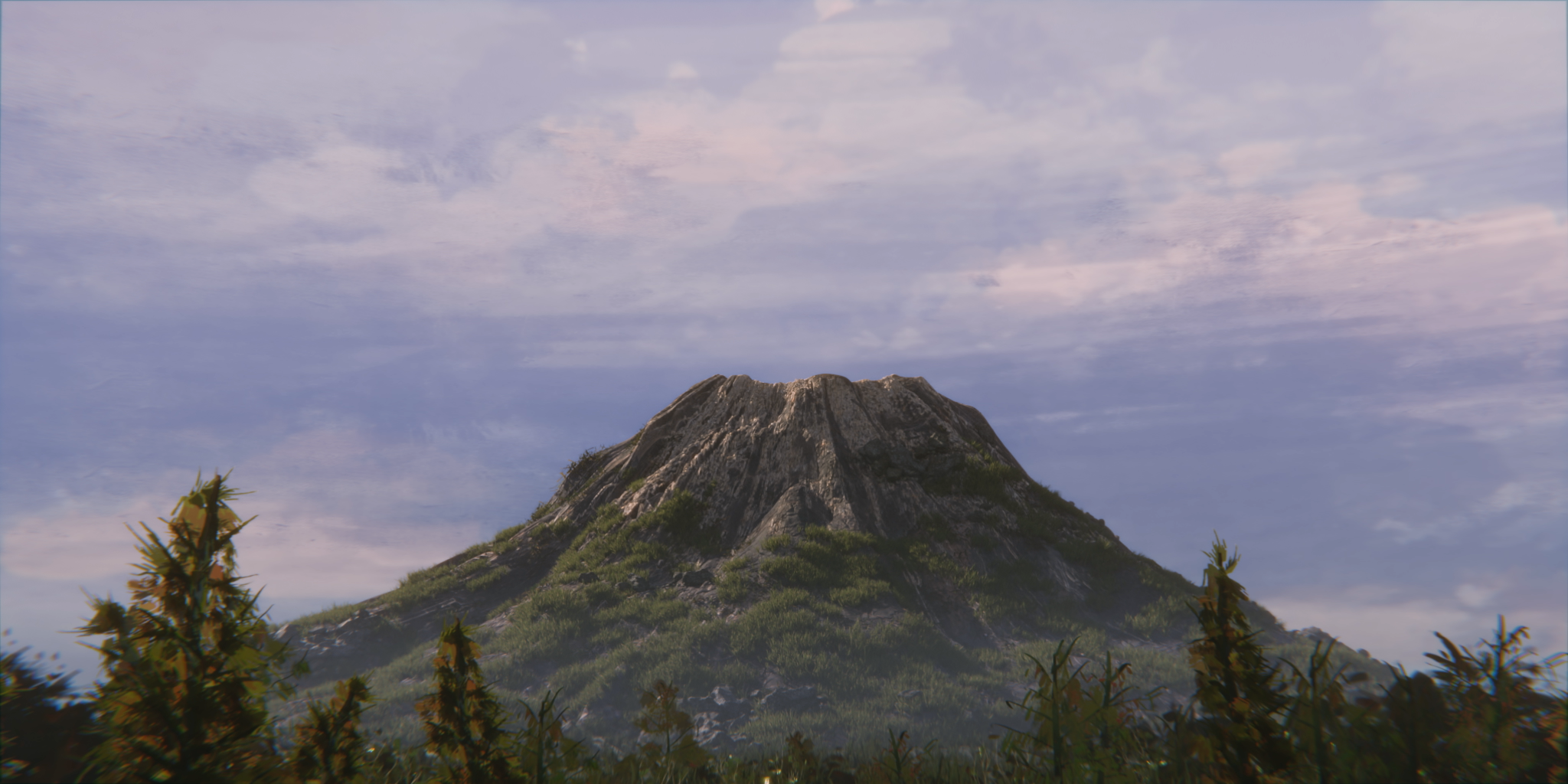
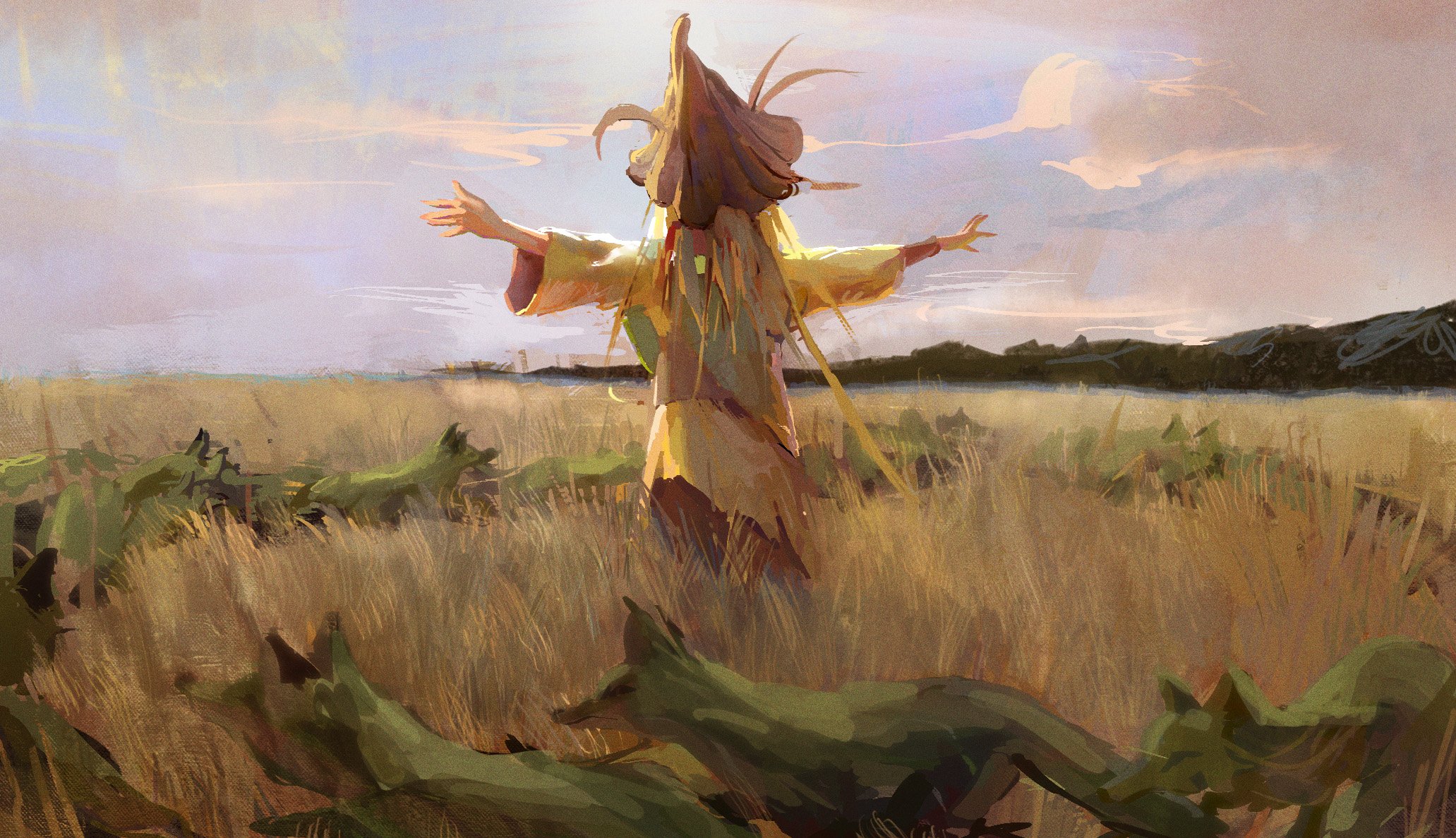
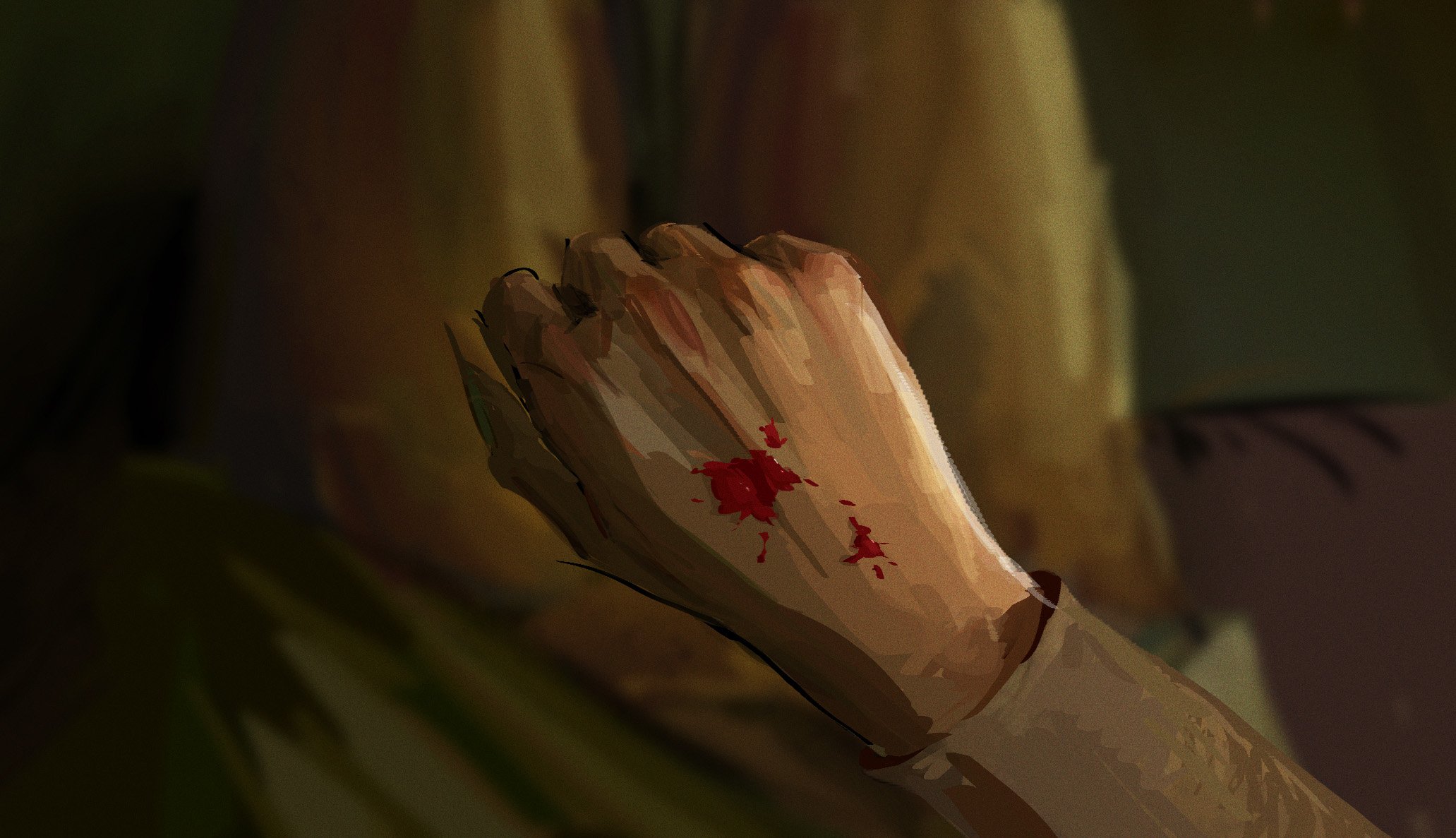
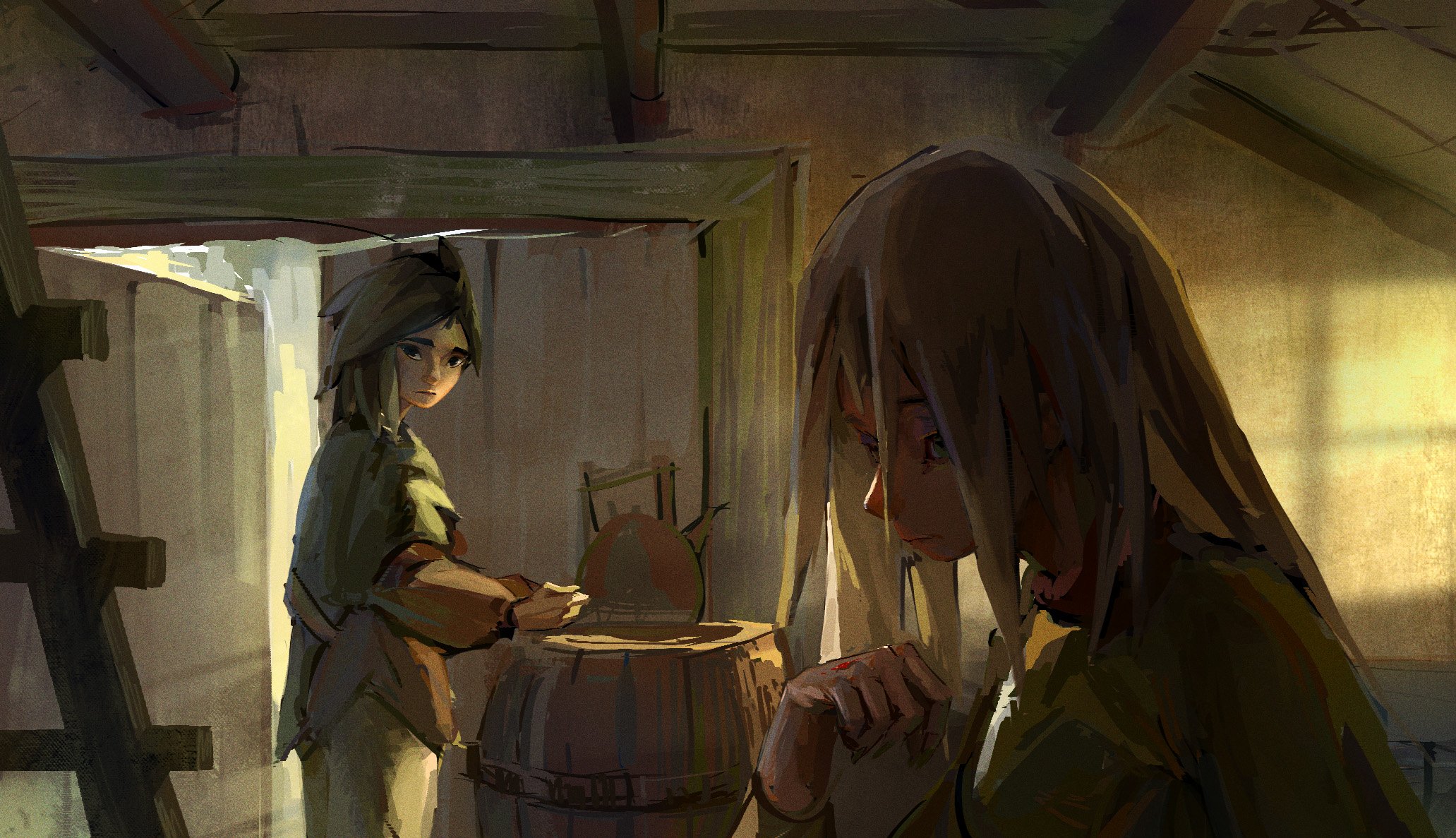
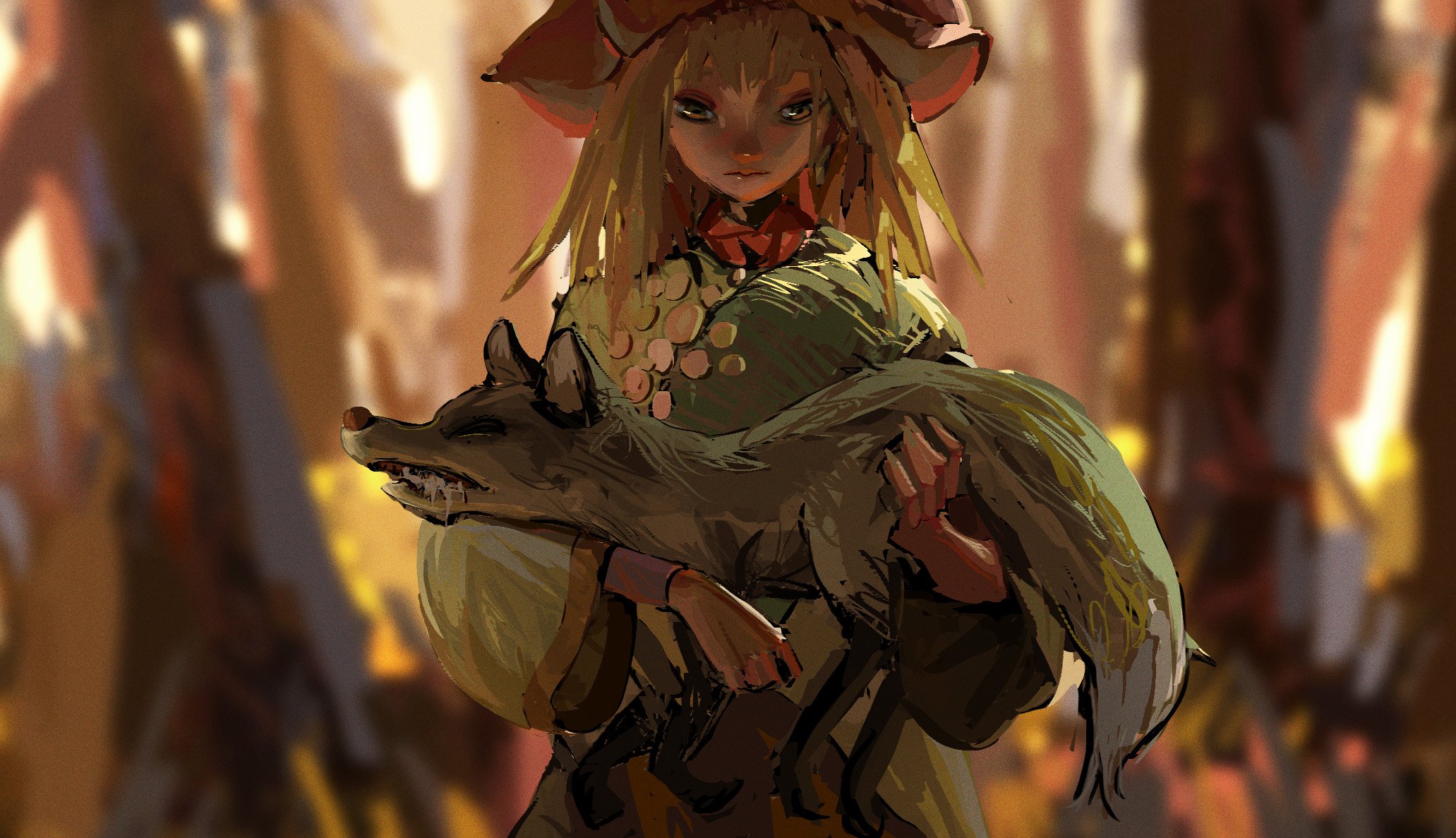
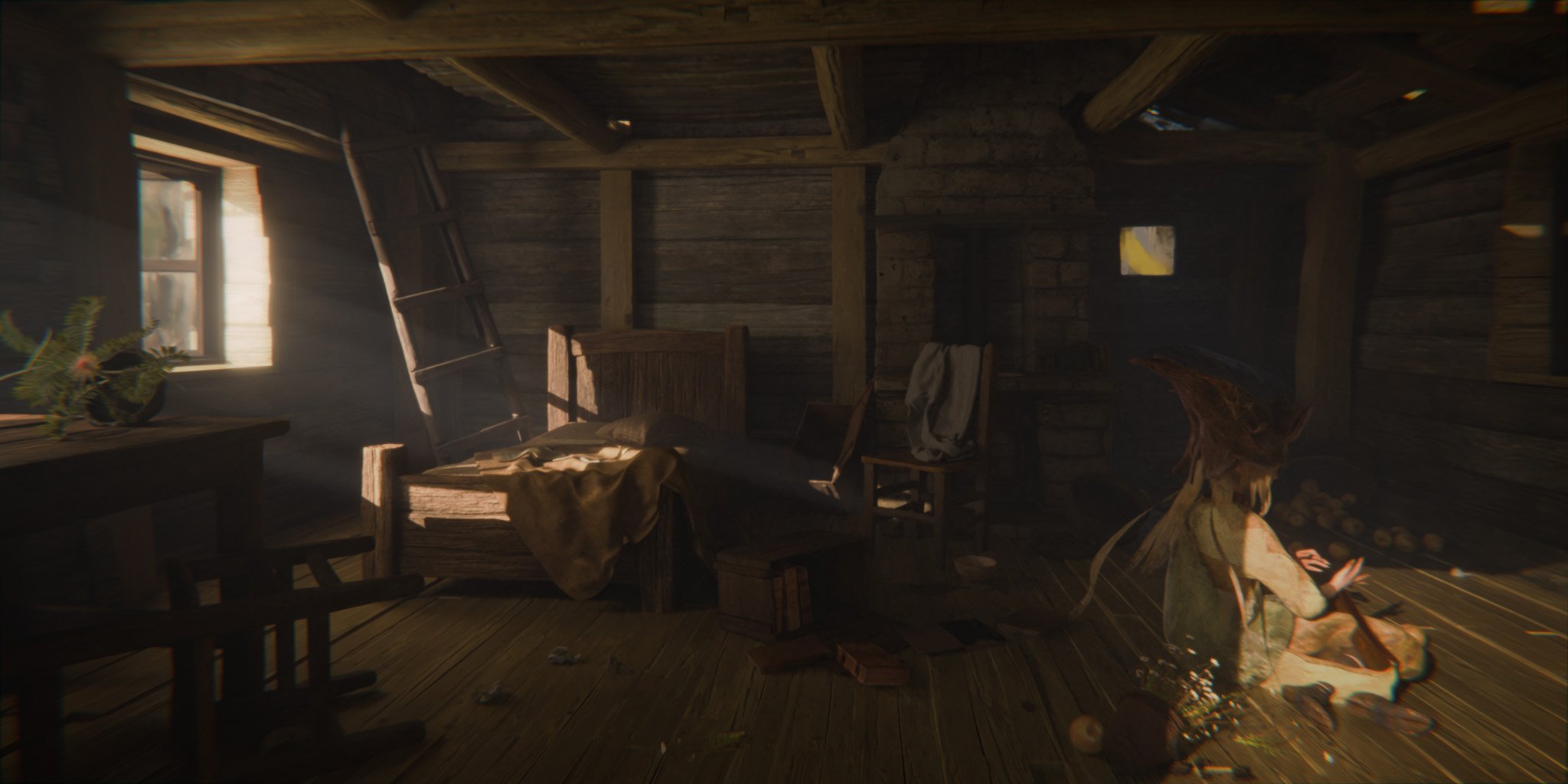
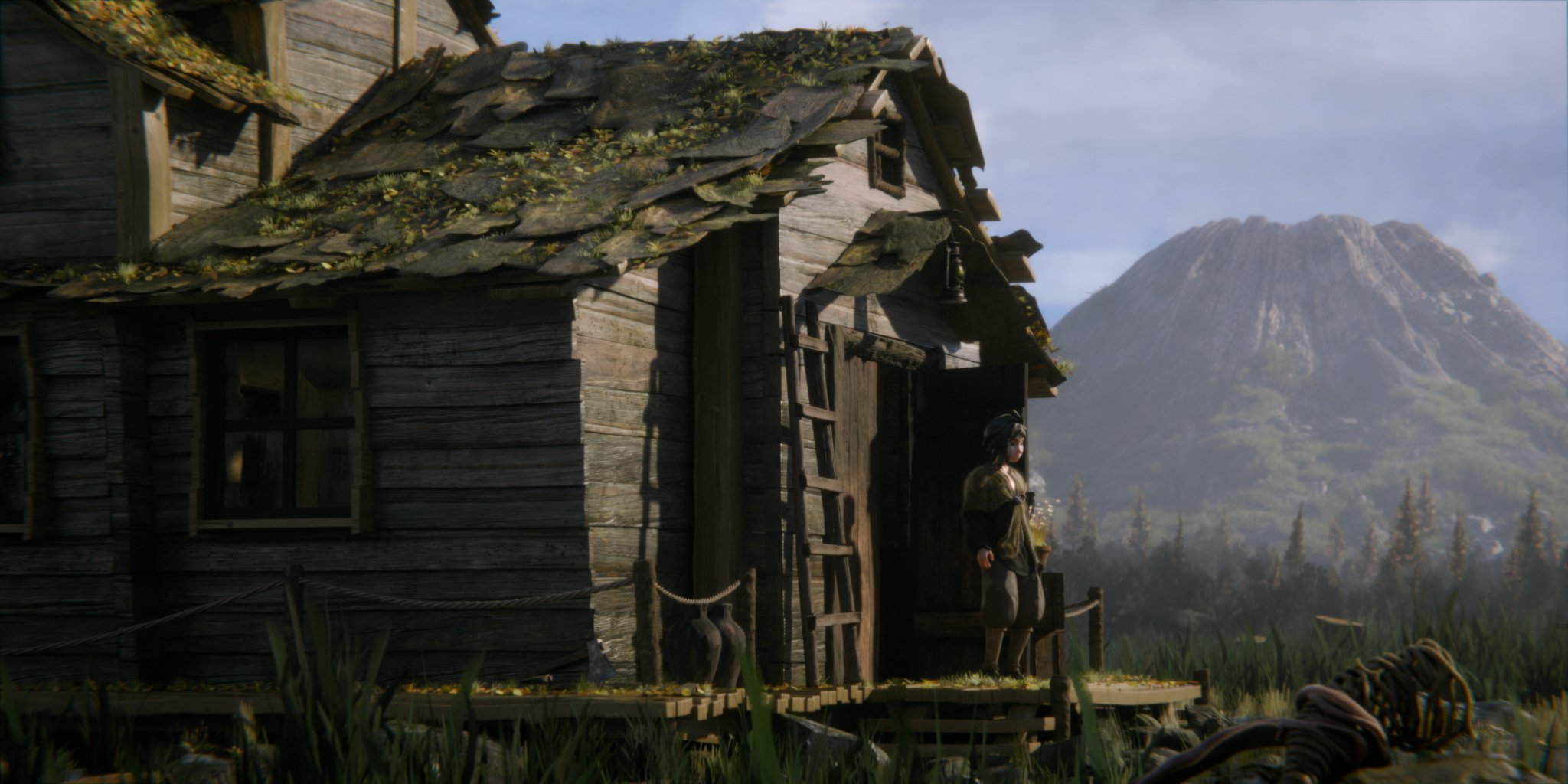
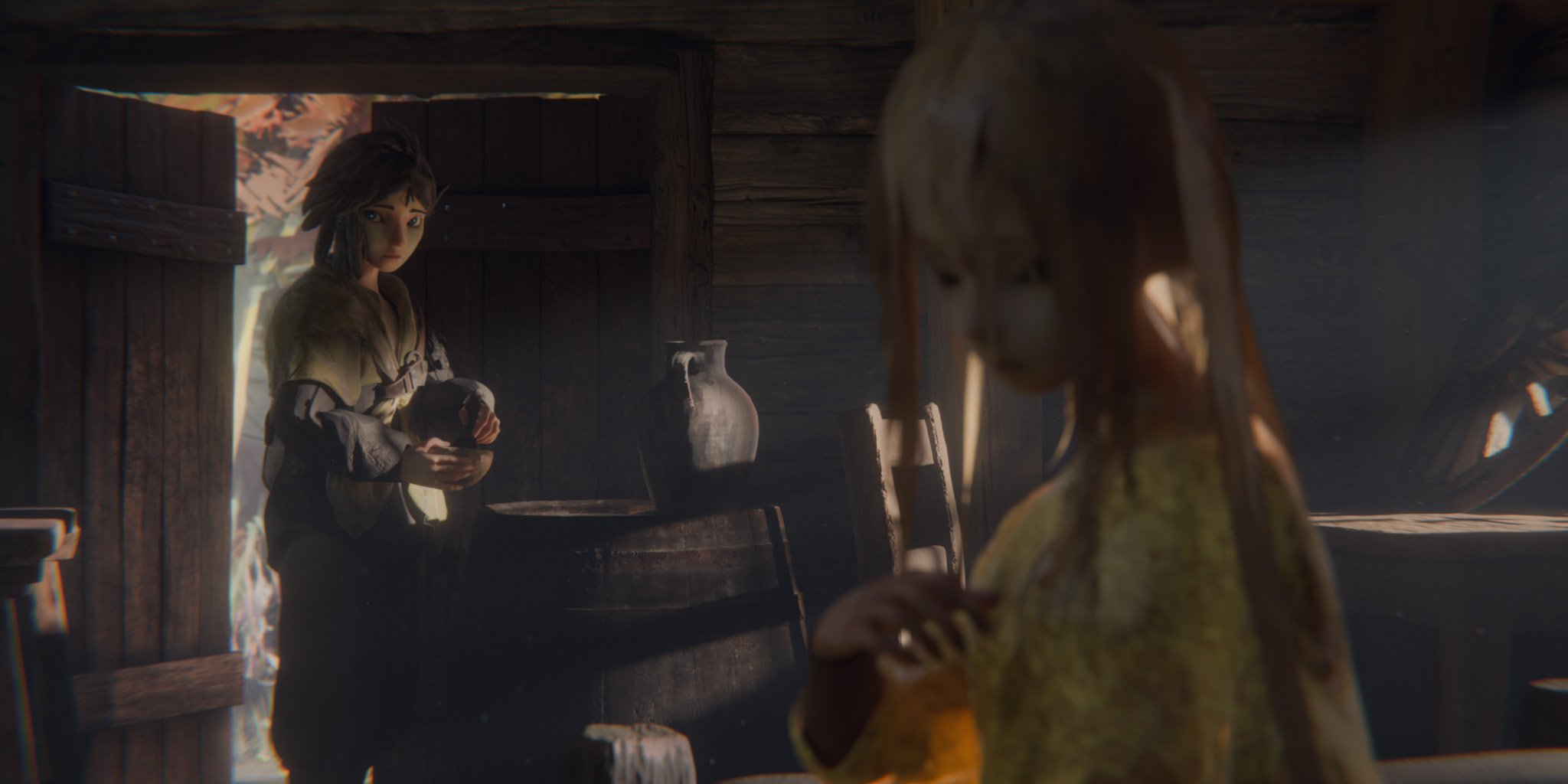
Floraspira: Ash is a natural-fantasy animated short about two lovers living at the foot of a volcano, navigating their own obsessions and fears to find their way back to each other. It is the fourth episode in Floraspira, an ongoing personal series exploring the relationship between natural forces and human emotion.
The film pursues a "de-CG" aesthetic, using deliberate material design to emulate the handcrafted texture of live-action and stop-motion filmmaking. The goal is a world that feels not just seen but tangible, where the roughness of surfaces becomes an intuitive gateway into the characters' inner emotional states.
Floraspira: Ash was realized primarily as a one-person animated film by director Zeming Sun, who guided the project from concept to final image across writing, art direction, animation, visual development, compositing, and original music. Additional character and asset work was contributed by Haoyue Xu, with sound design and final mix by Joey Zuye Liu. The film was produced as Zeming Sun’s thesis project in the Expanded Animation program at the USC School of Cinematic Arts.
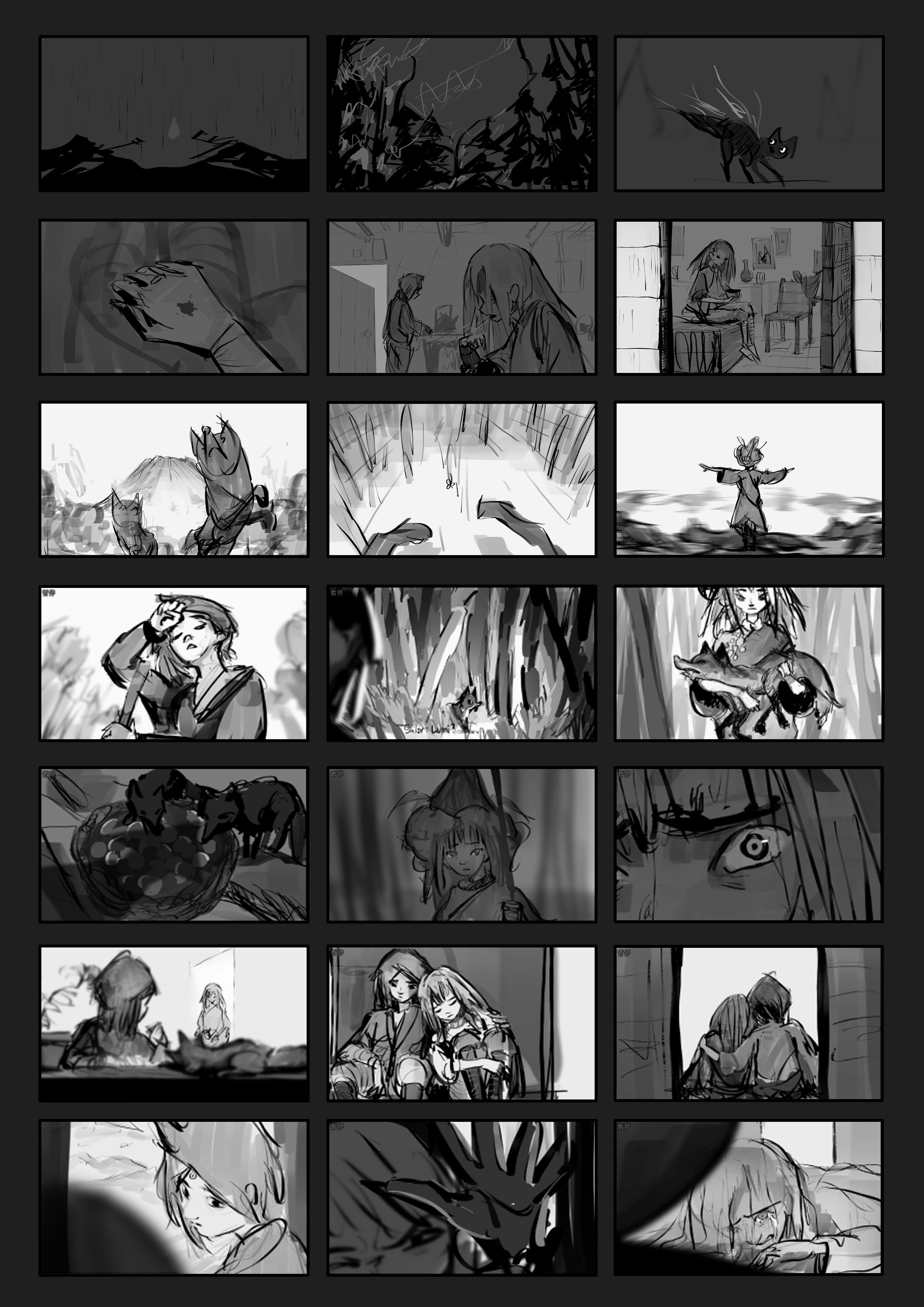
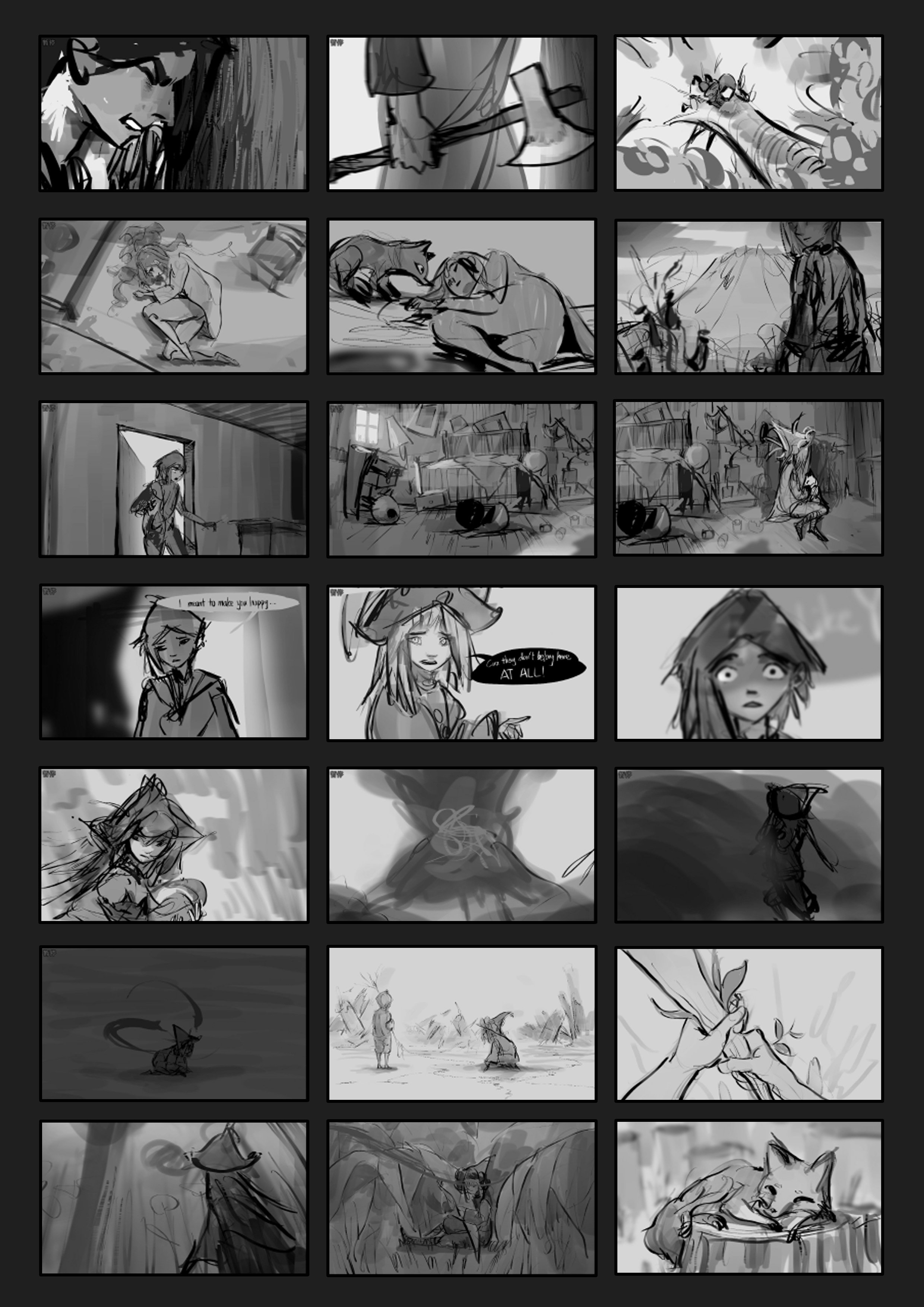
Breakdown
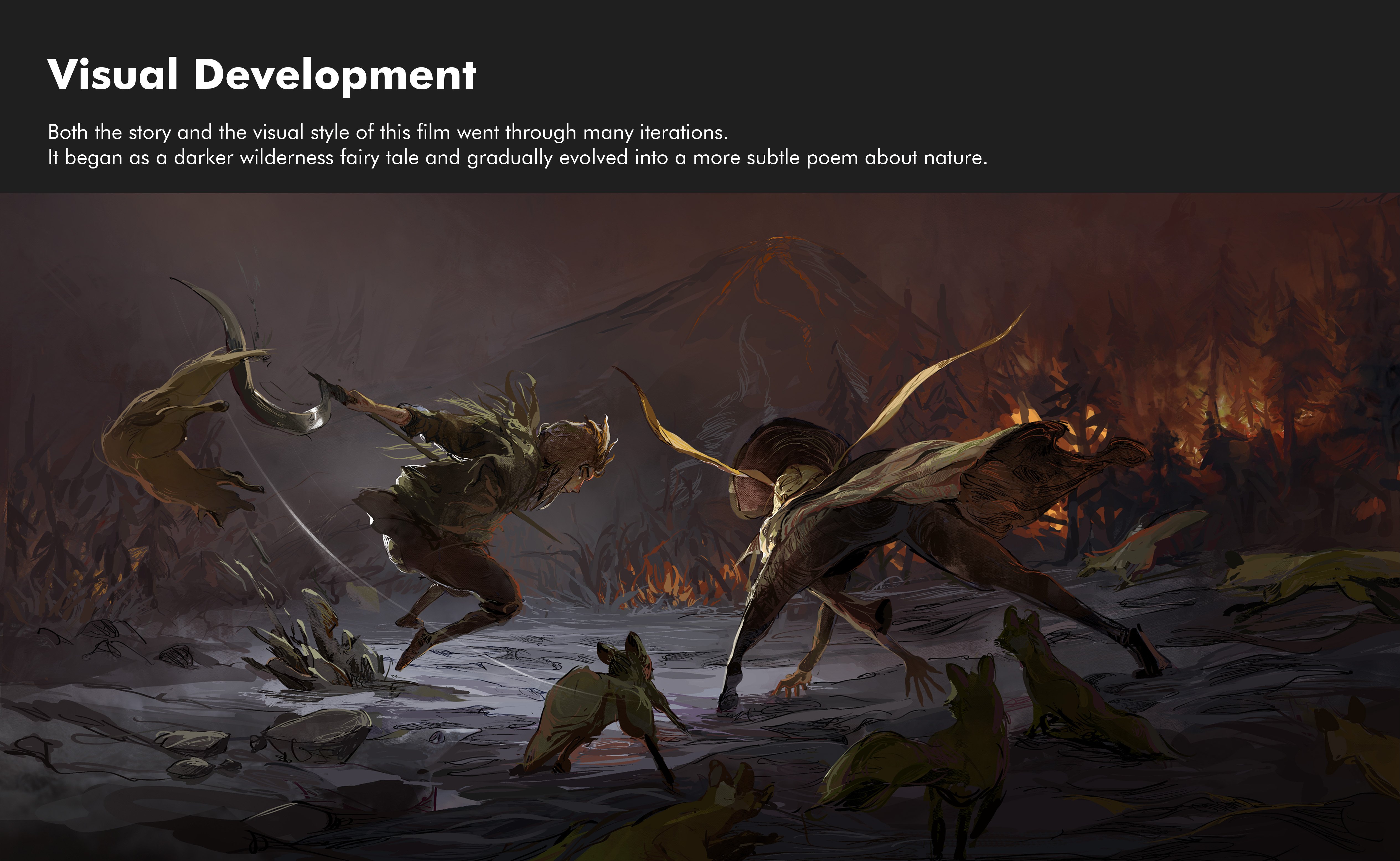
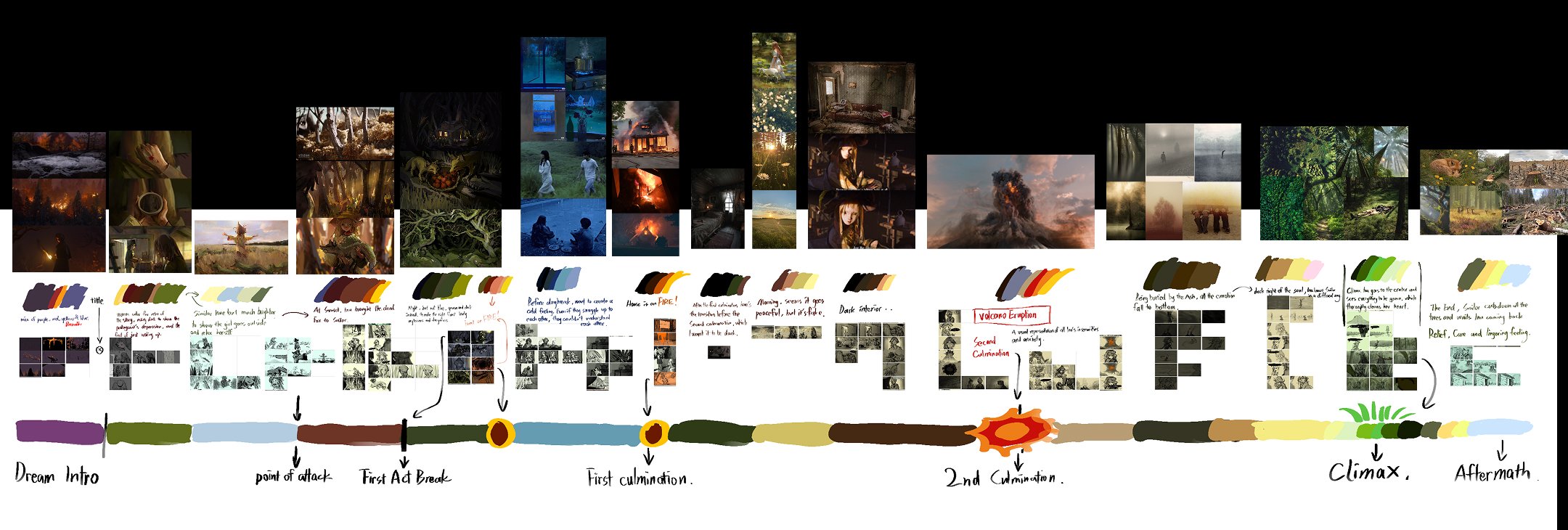
Visual Development
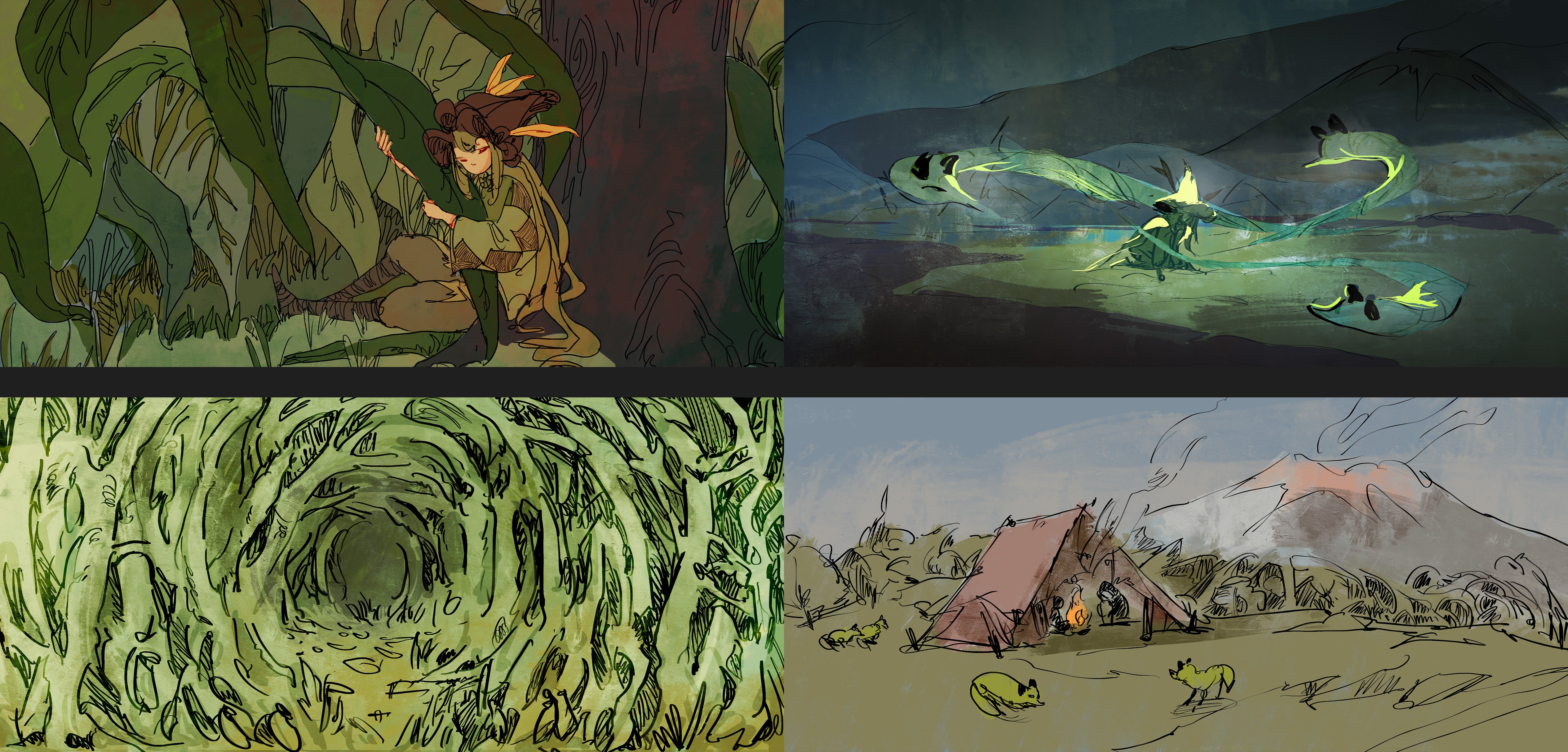
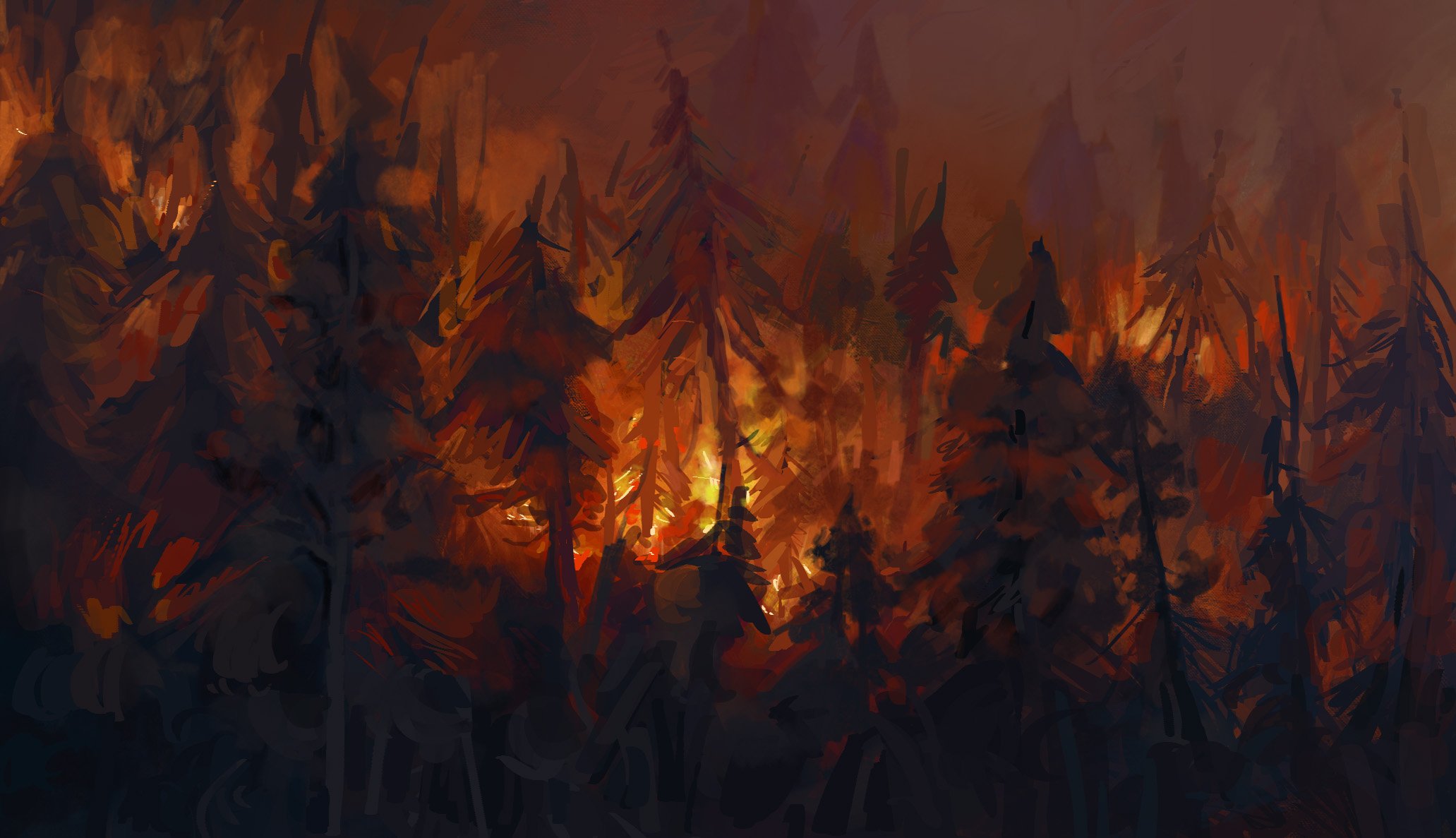
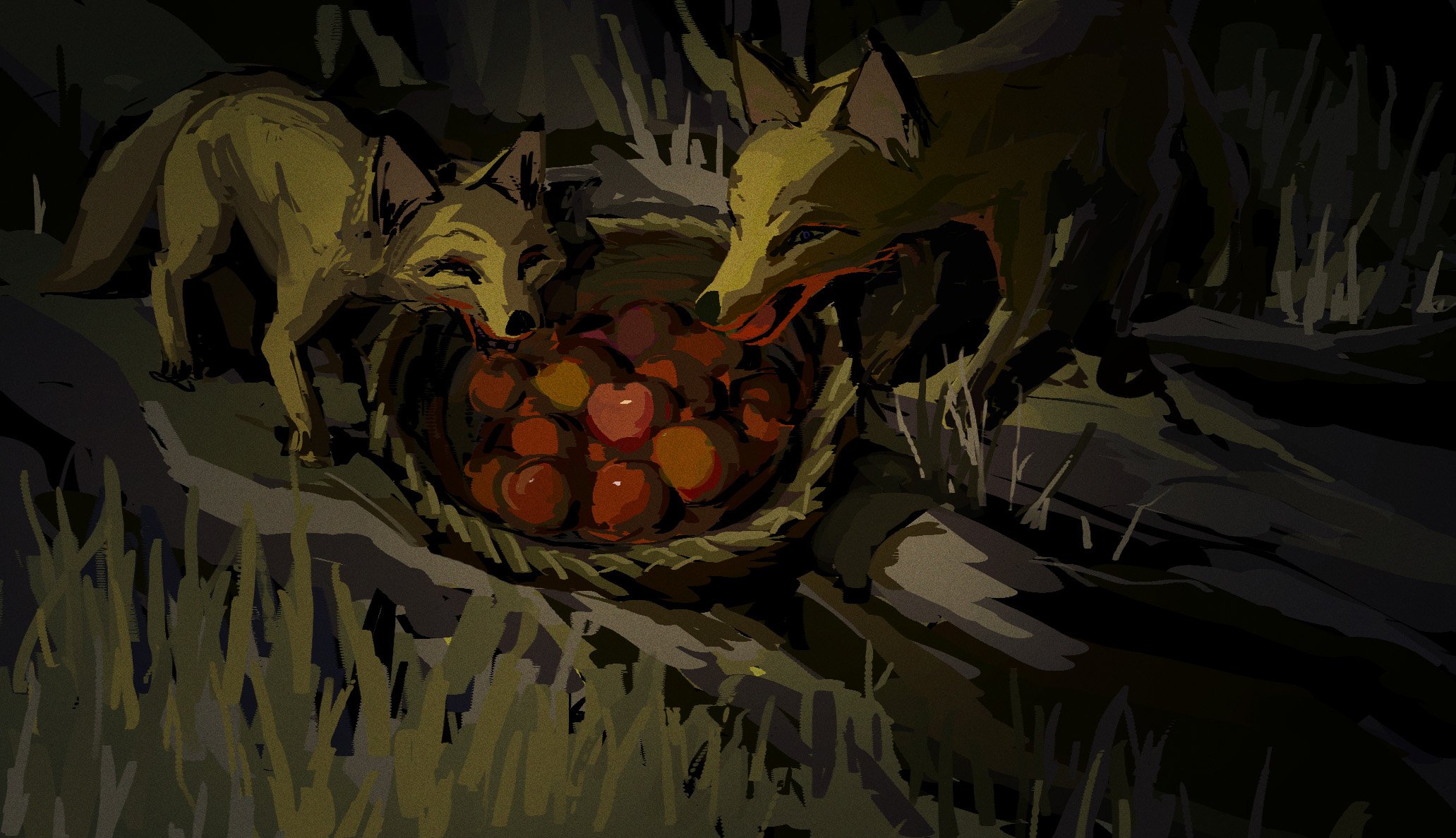
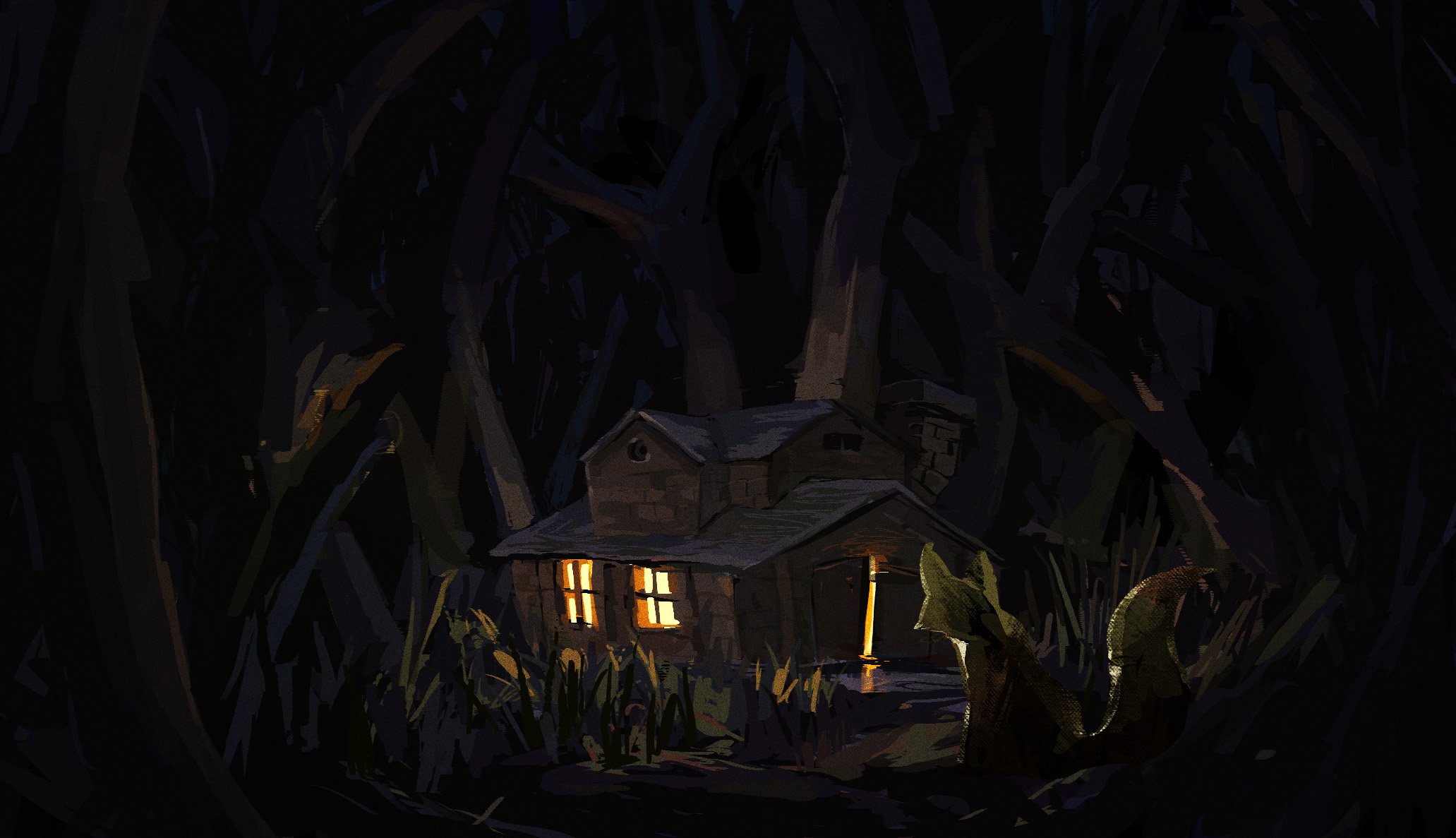
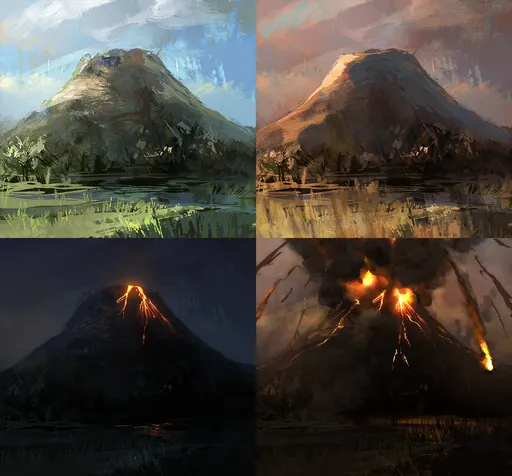
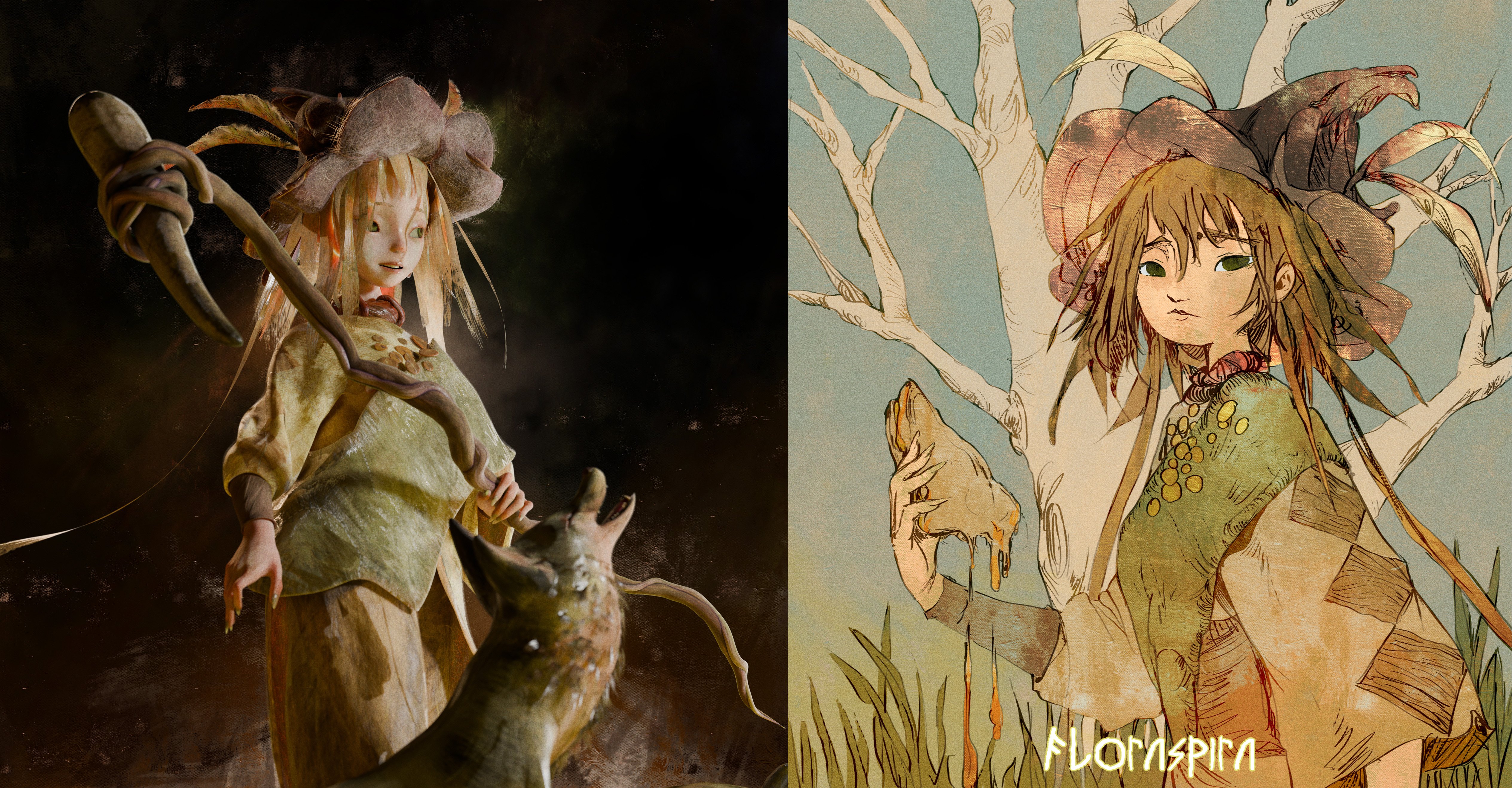
Both the story and the visual style of this film went through many iterations. It began as a darker wilderness fairy tale and gradually evolved into a more subtle poem about nature.
The two directors who influenced the film’s aesthetic the most are Terrence Malick and Andrei Tarkovsky. Both are especially skilled at using nature as a metaphor for inner emotion. In terms of character design and texture, I was also heavily inspired by Laika’s The Boxtrolls and the Japanese stop-motion animation Gon, the Little Fox. I tried to study and thoughtfully combine these influences, eventually shaping them into my own visual language.
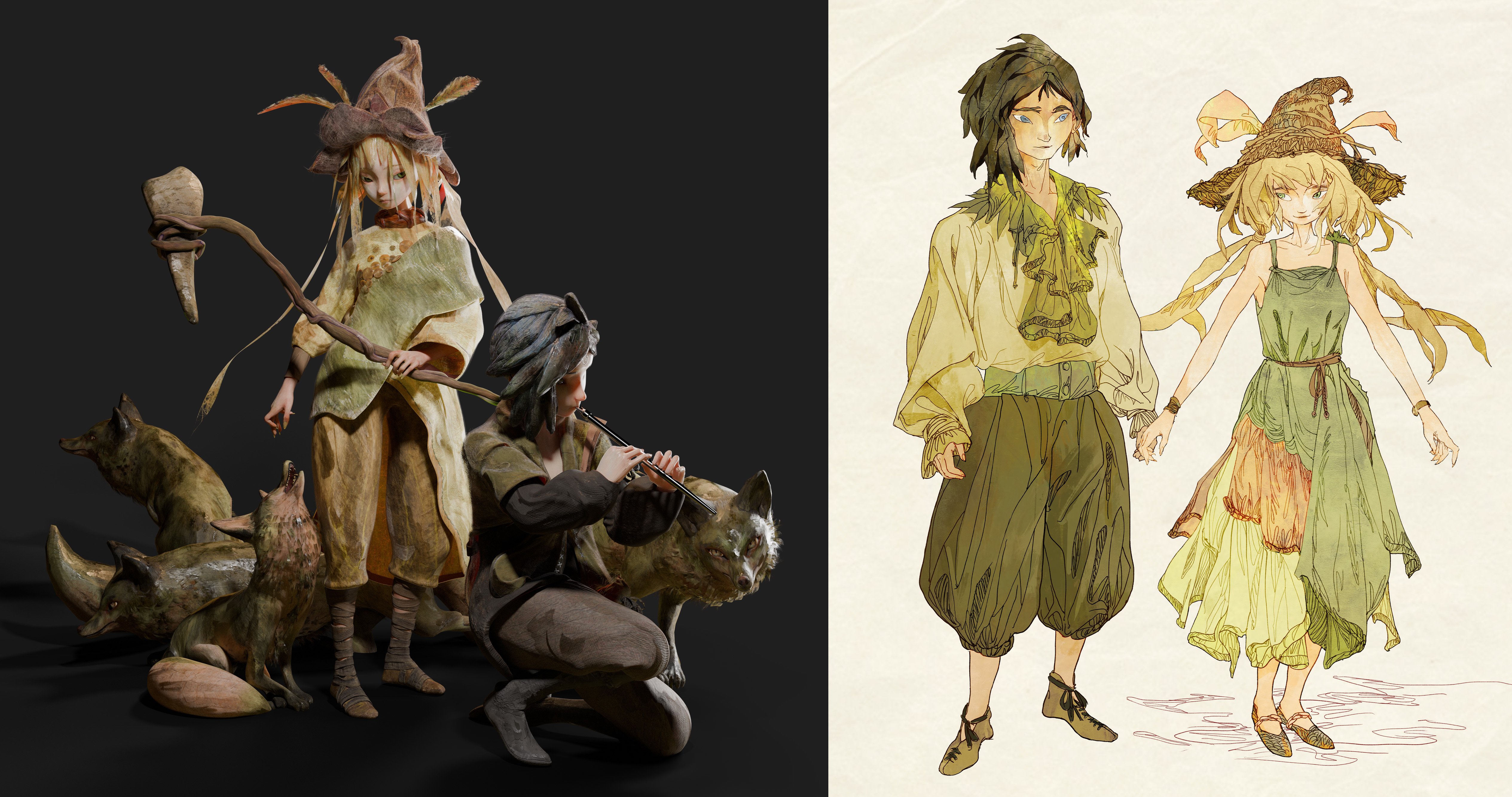
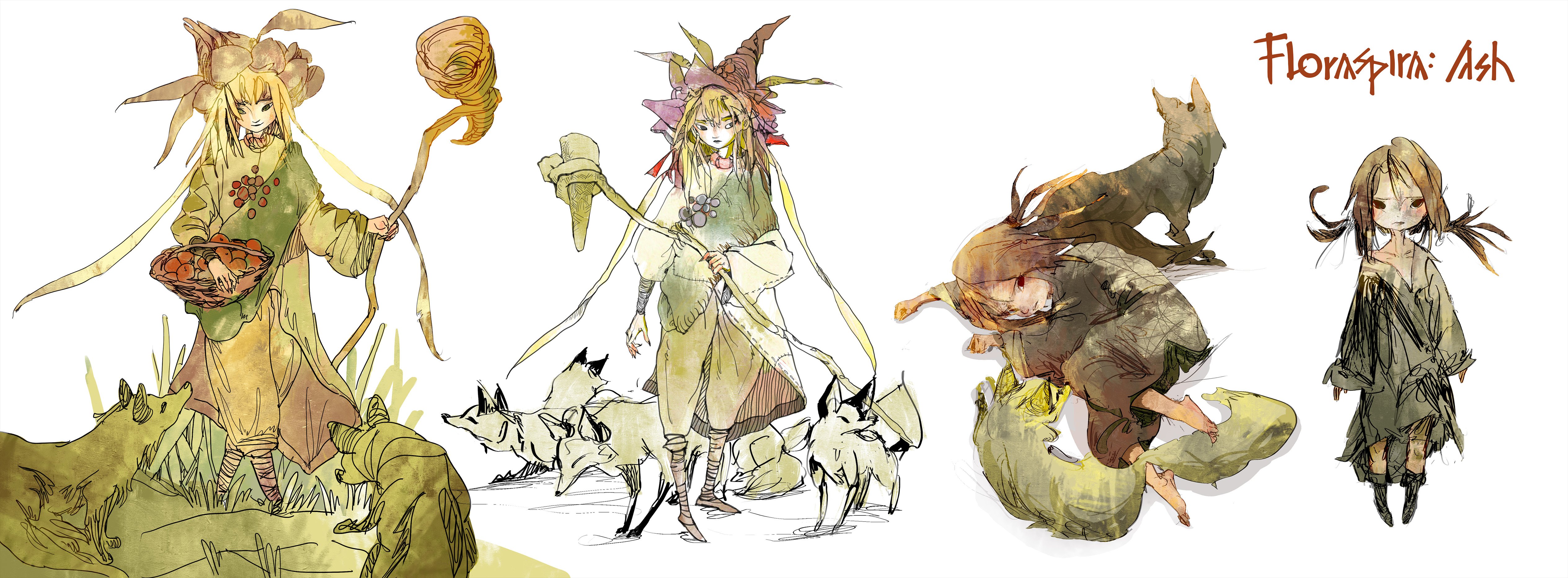
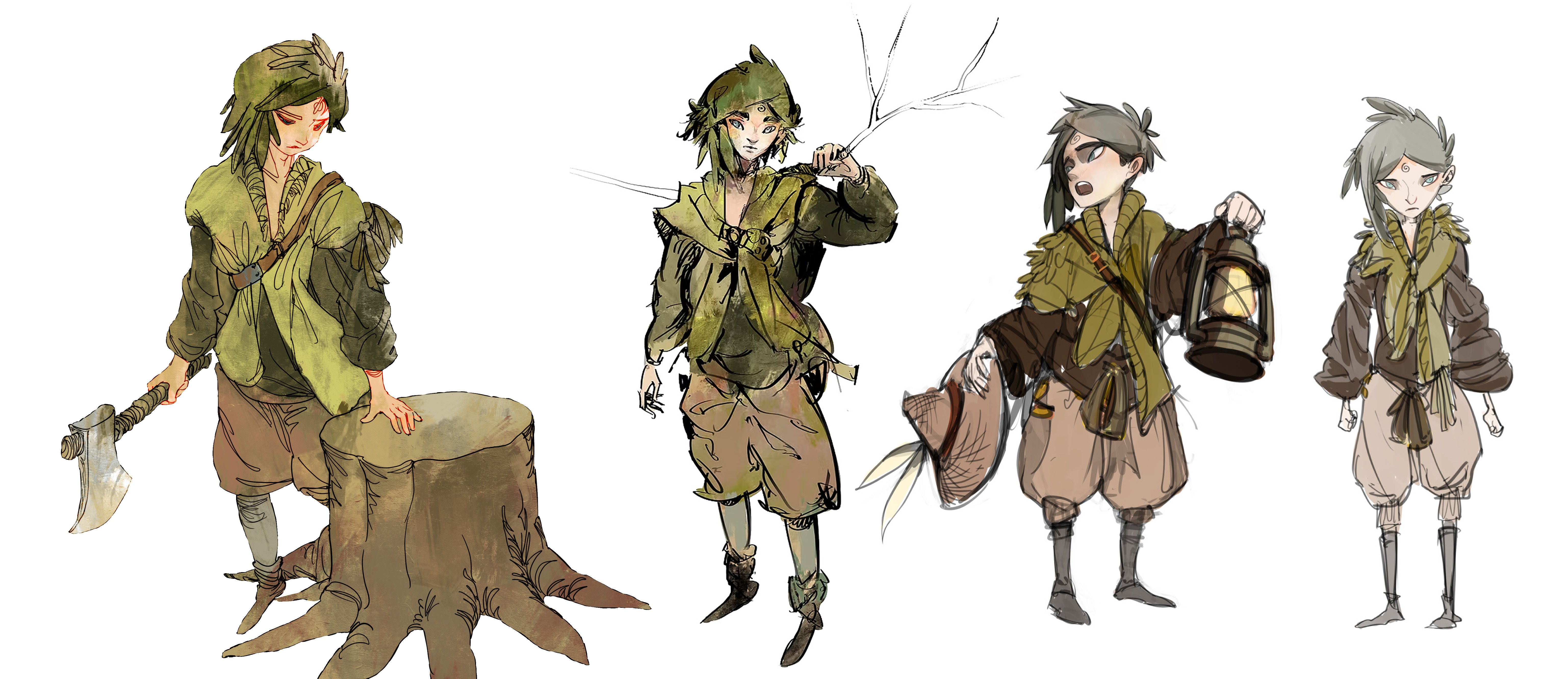
Character Design
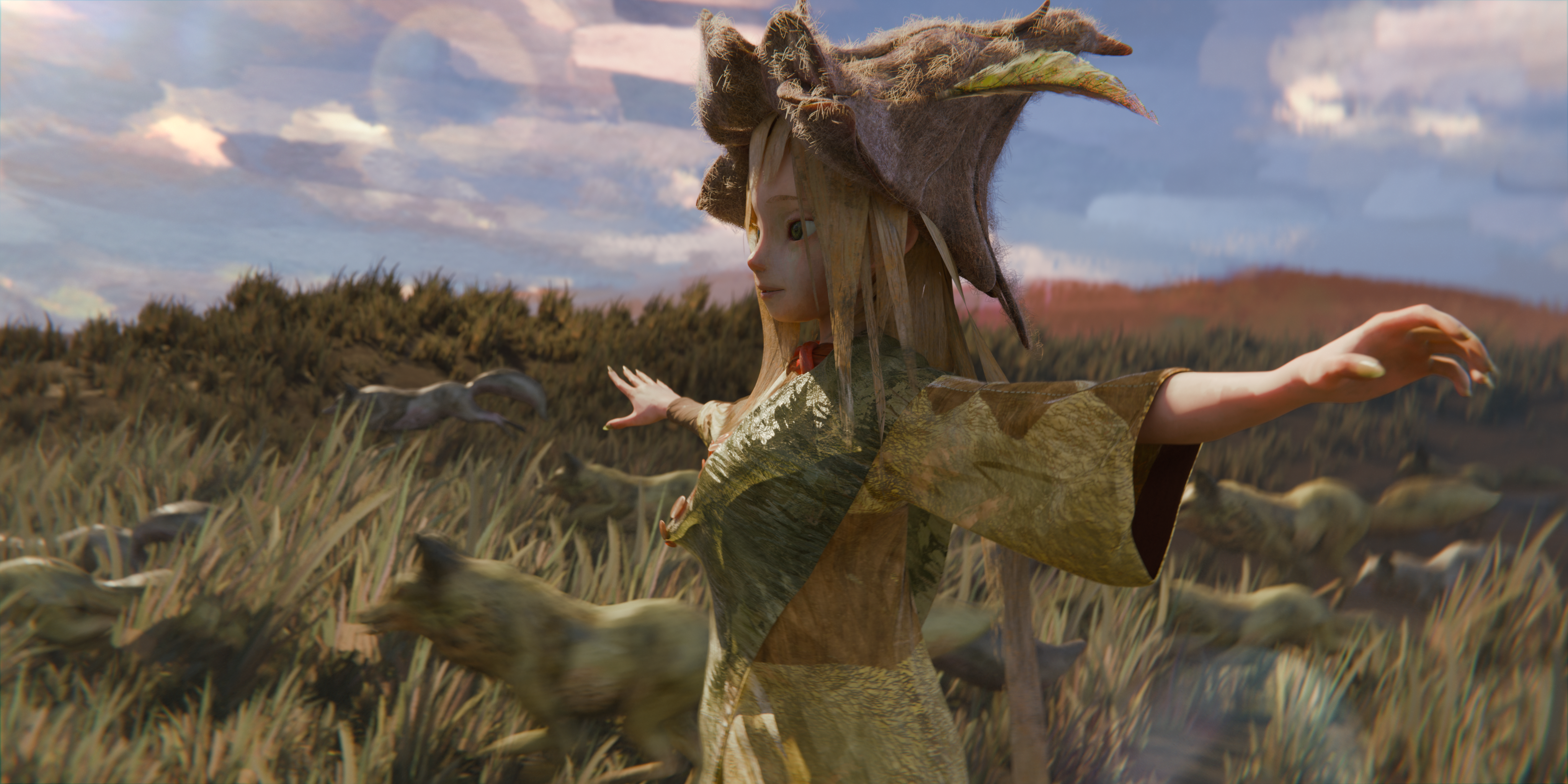
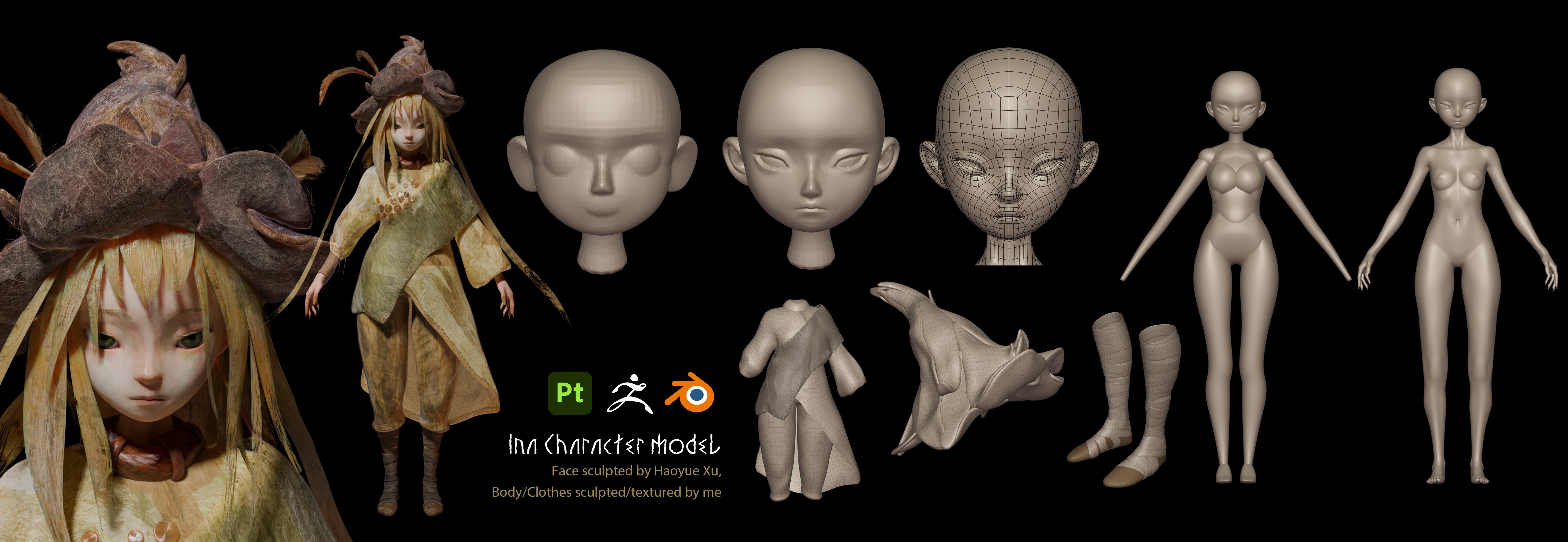
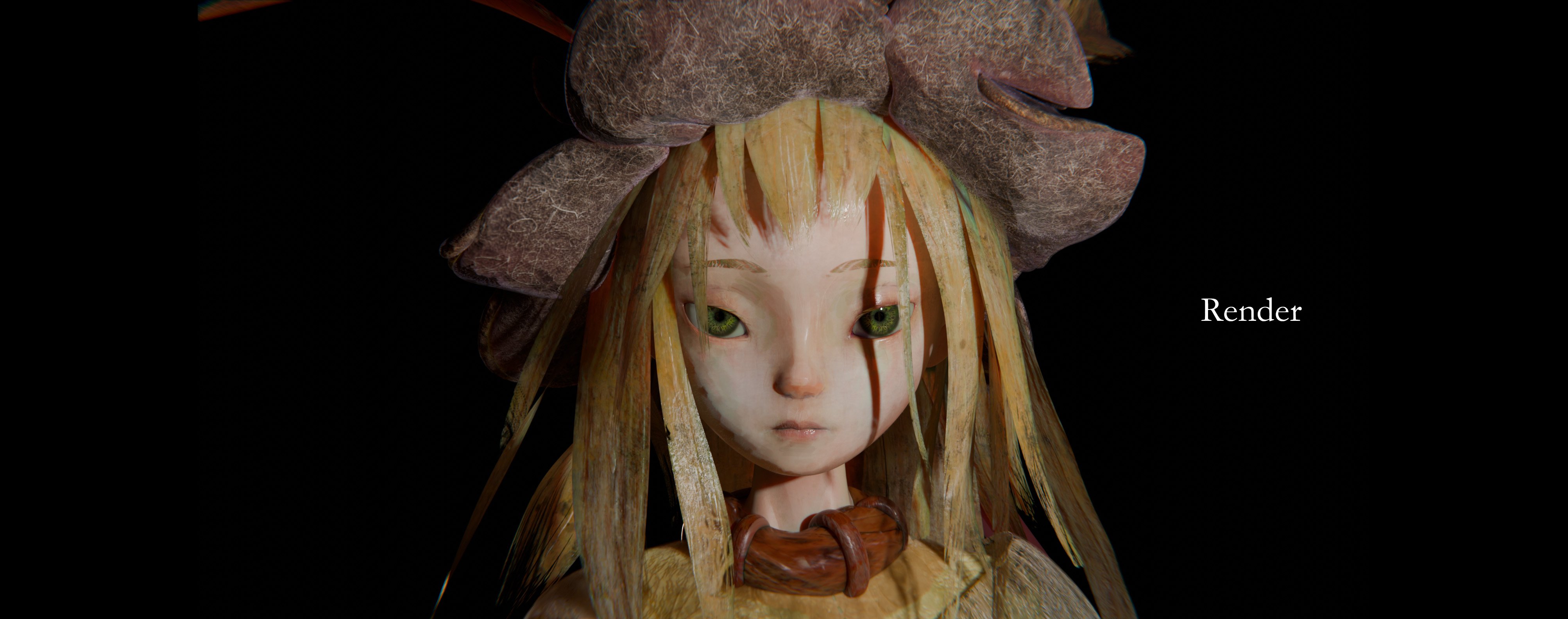
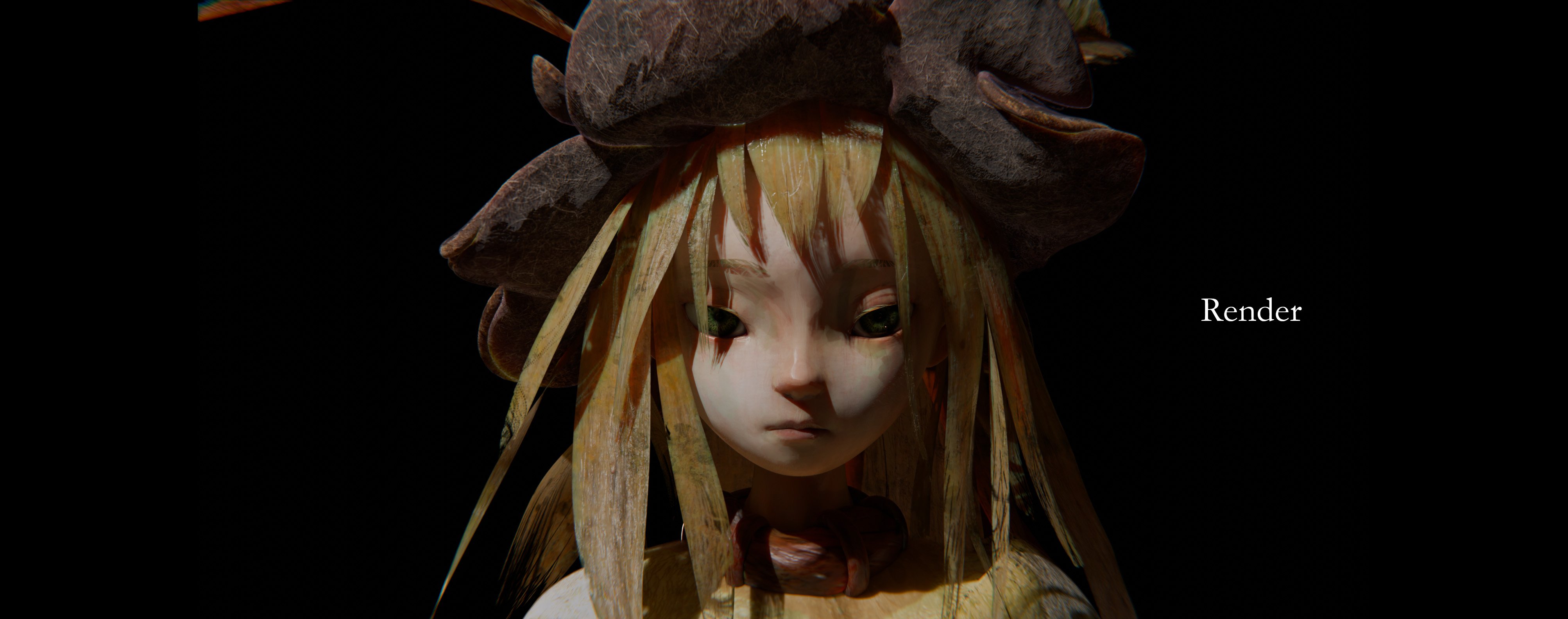
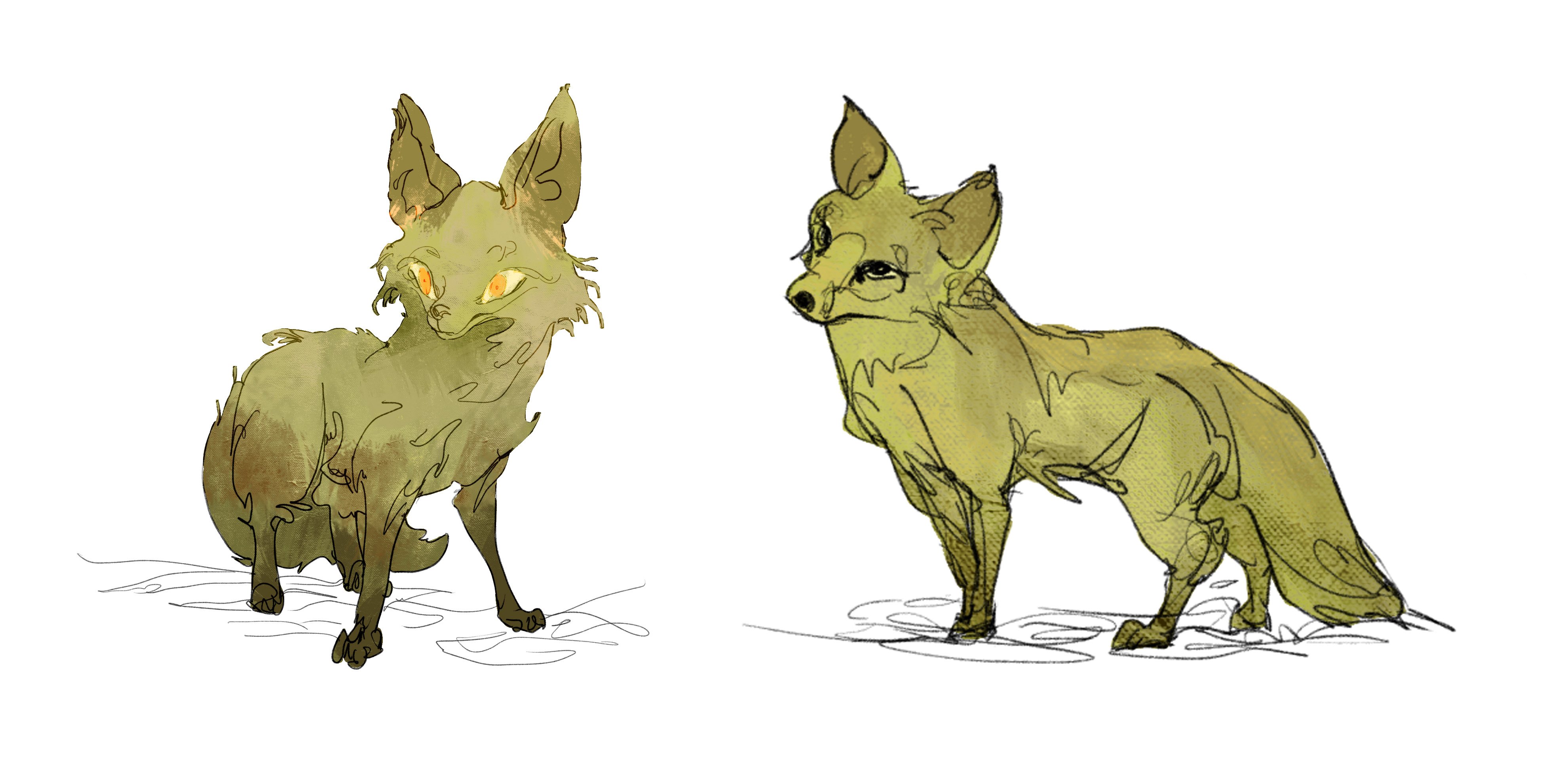
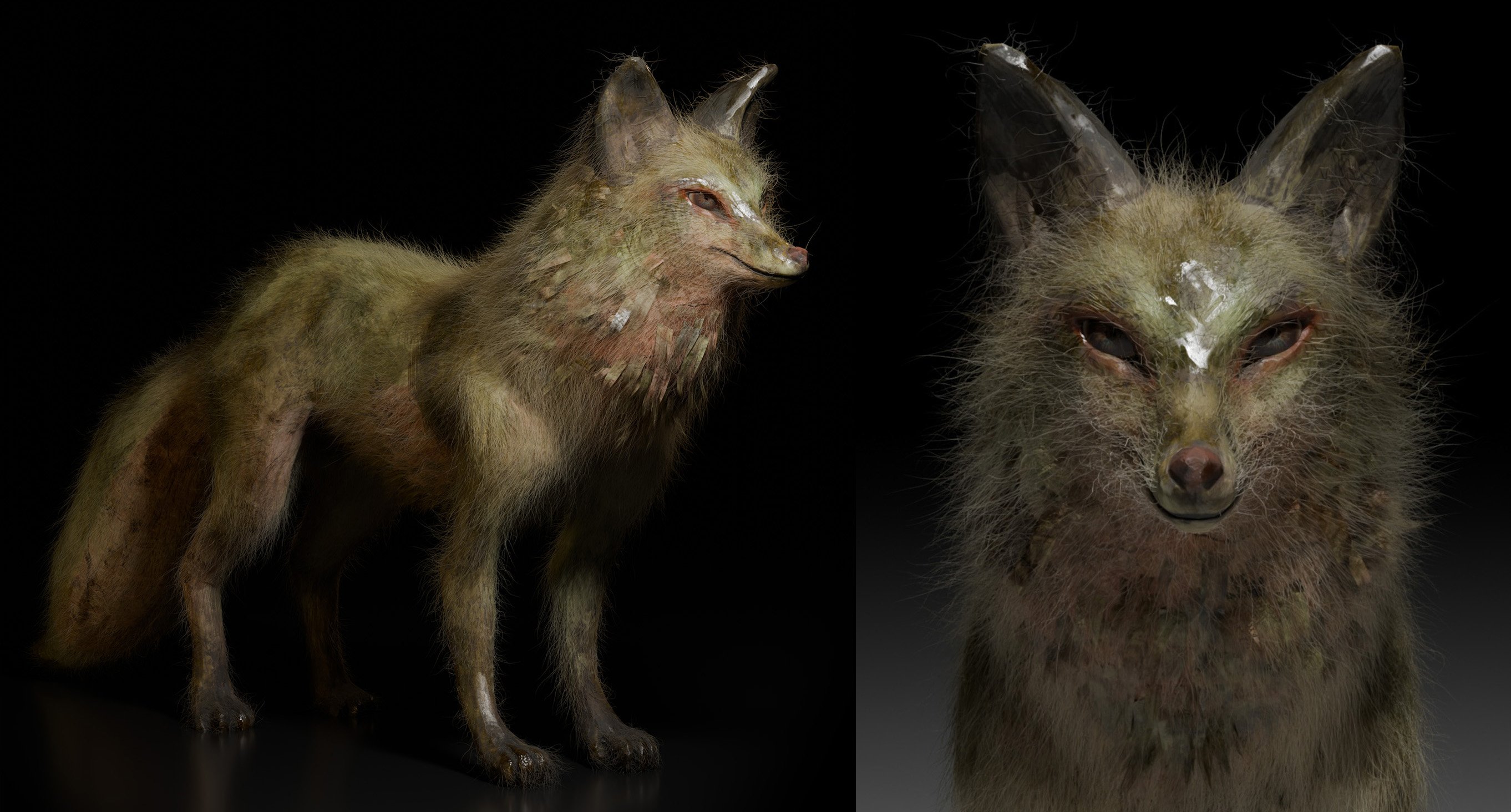
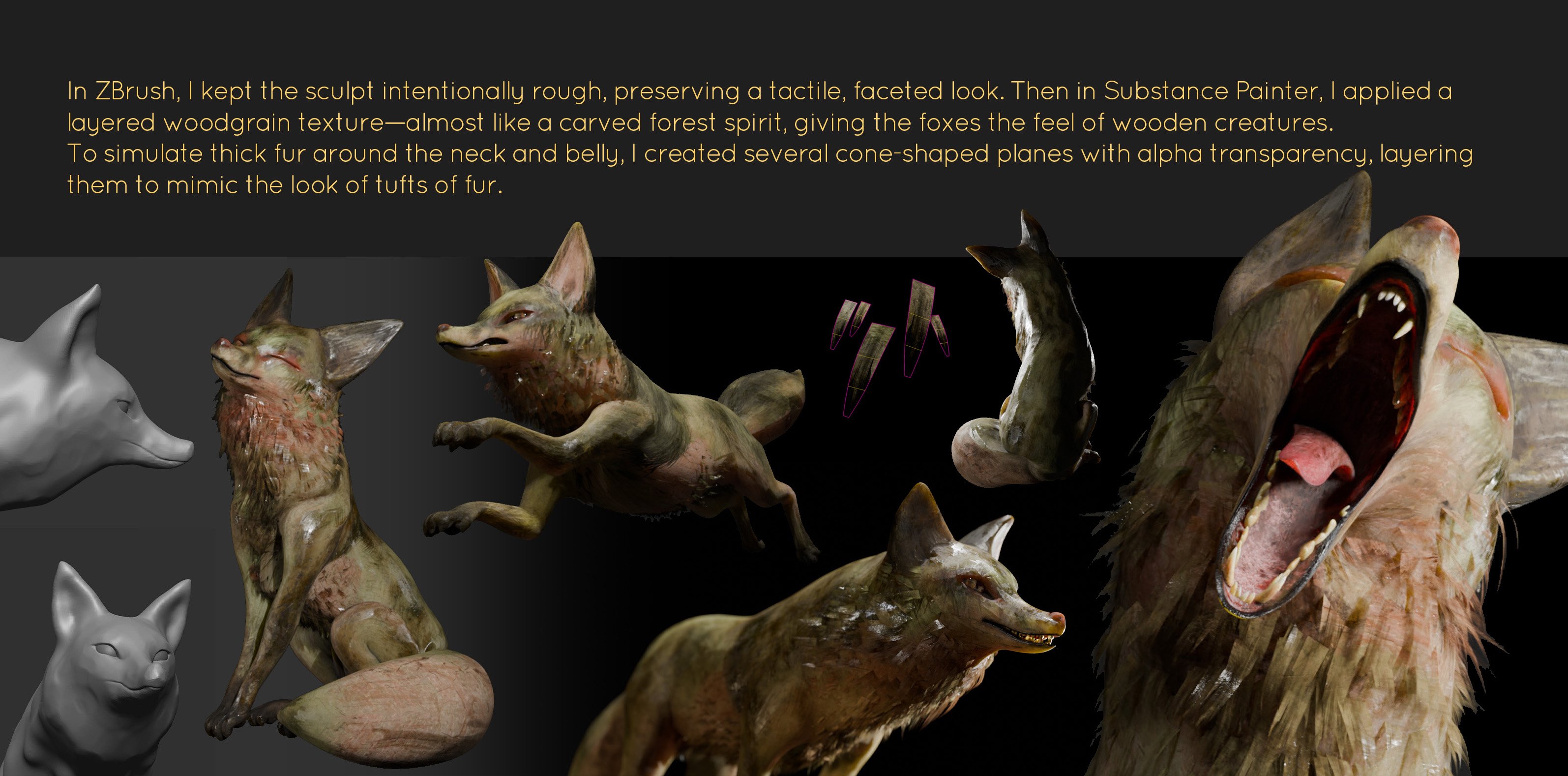
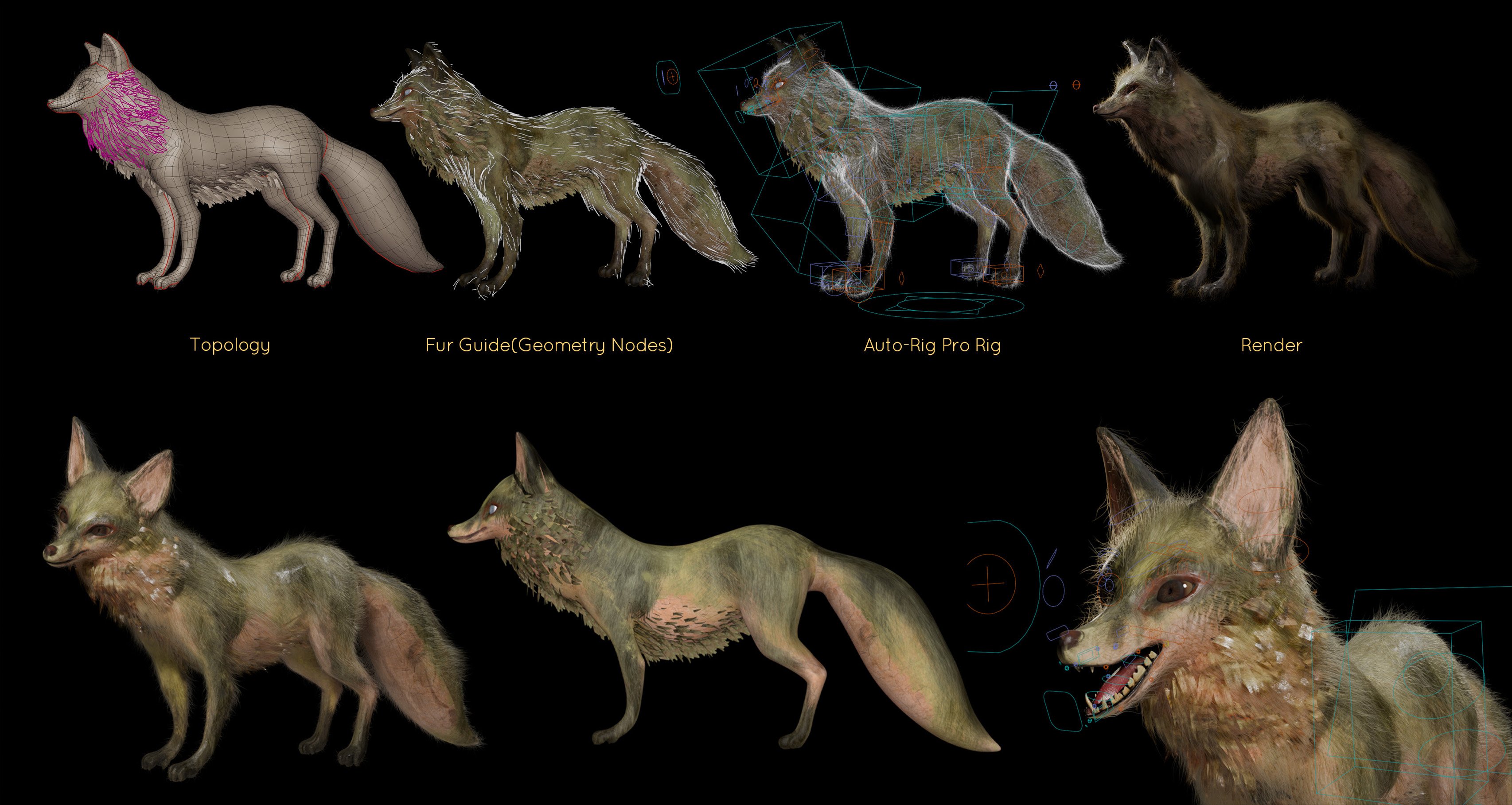
The film features two humanoid characters, a girl named Ina and a boy named Sailor, as well as a group of green foxes. Among the foxes is a young fox named Lumi. They live together in a forest at the foot of a volcano, depending on one another for survival. I wanted their designs to feel very close to nature, so I gave them clothing with textures reminiscent of moss, twigs, mushrooms, and wool felt. For the hairstyles, I used organic forms as simplified visual metaphors rather than depicting individual strands of realistic hair. Ina’s hair, for example, resembles corn husks, while Sailor’s hair is shaped more like tree bark.
Ina
Ina is a girl who loves foxes and shares a deep emotional bond with the fox pack. As a child, she lived through a volcanic eruption, and ever since she has been haunted by the fear that it might erupt again. This fear grows until she comes to believe that everything Sailor does will set off another eruption, and she sinks deeper and deeper into her own dread, unable to pull herself out.
Sailor
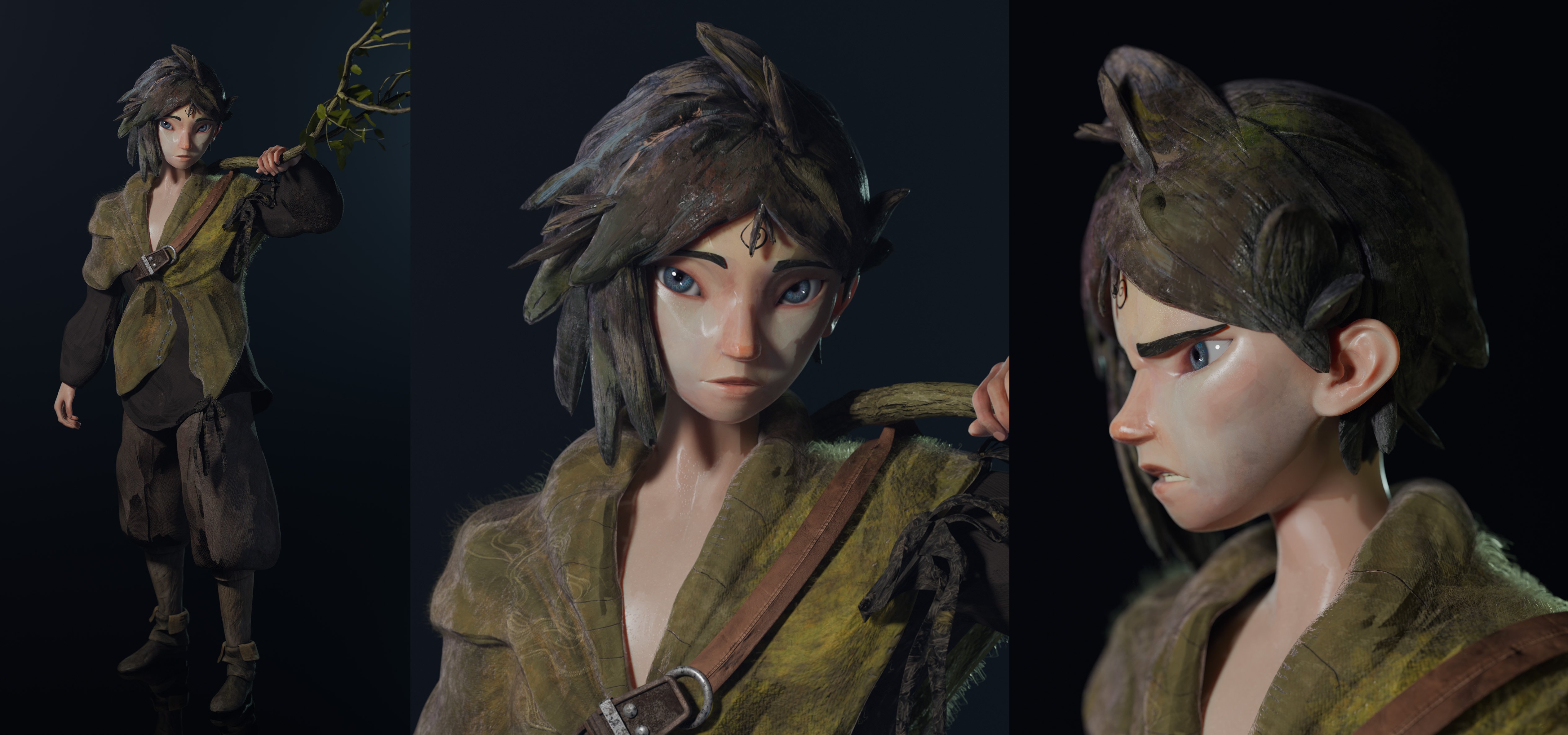
Sailor is a boy who loves planting trees and all kinds of flowers and plants. He believes that as long as he keeps planting, the natural world around them will grow beautiful and full of life. But the medicinal herbs he cultivates to treat Ina's lung disease are poisonous to foxes, and the trees spreading in every direction become, in Ina's mind, a suffocating cage.
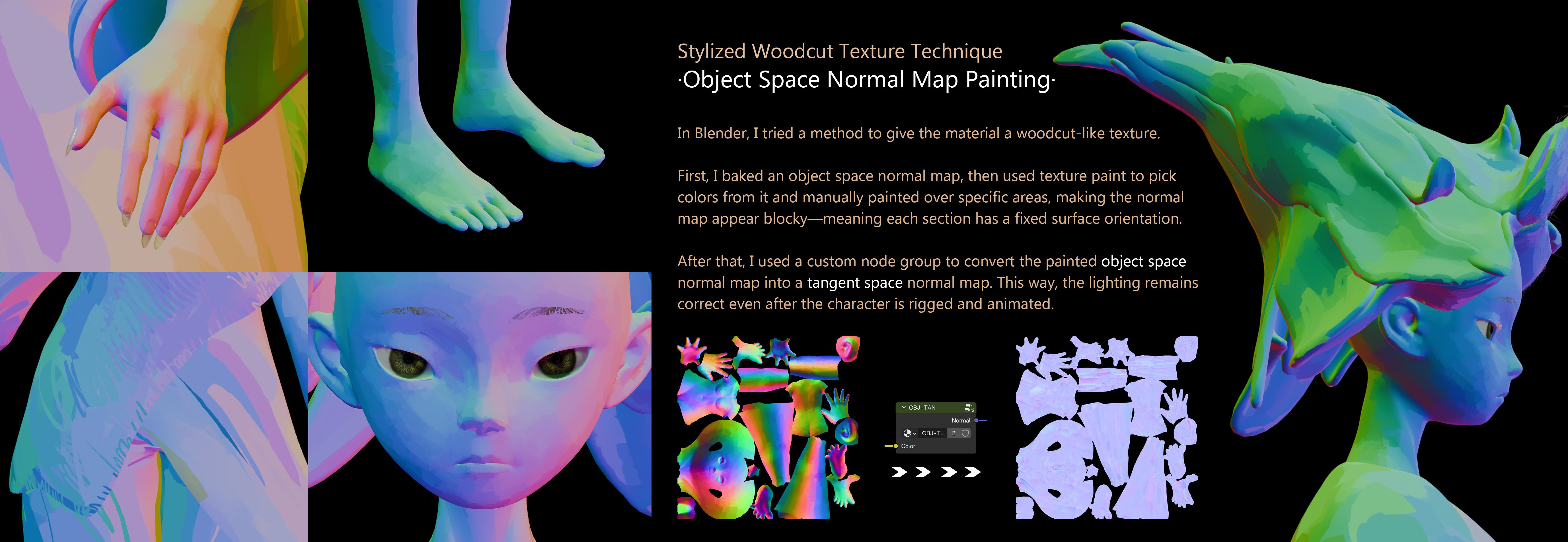
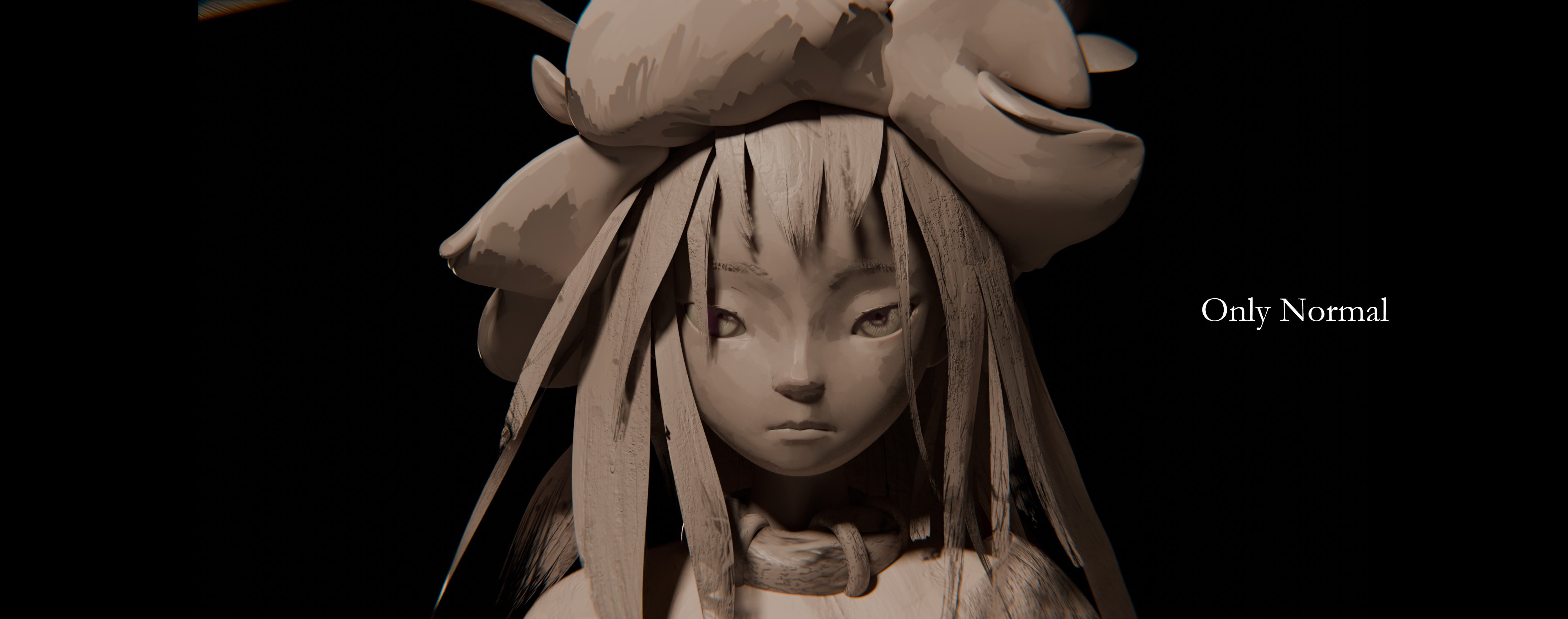
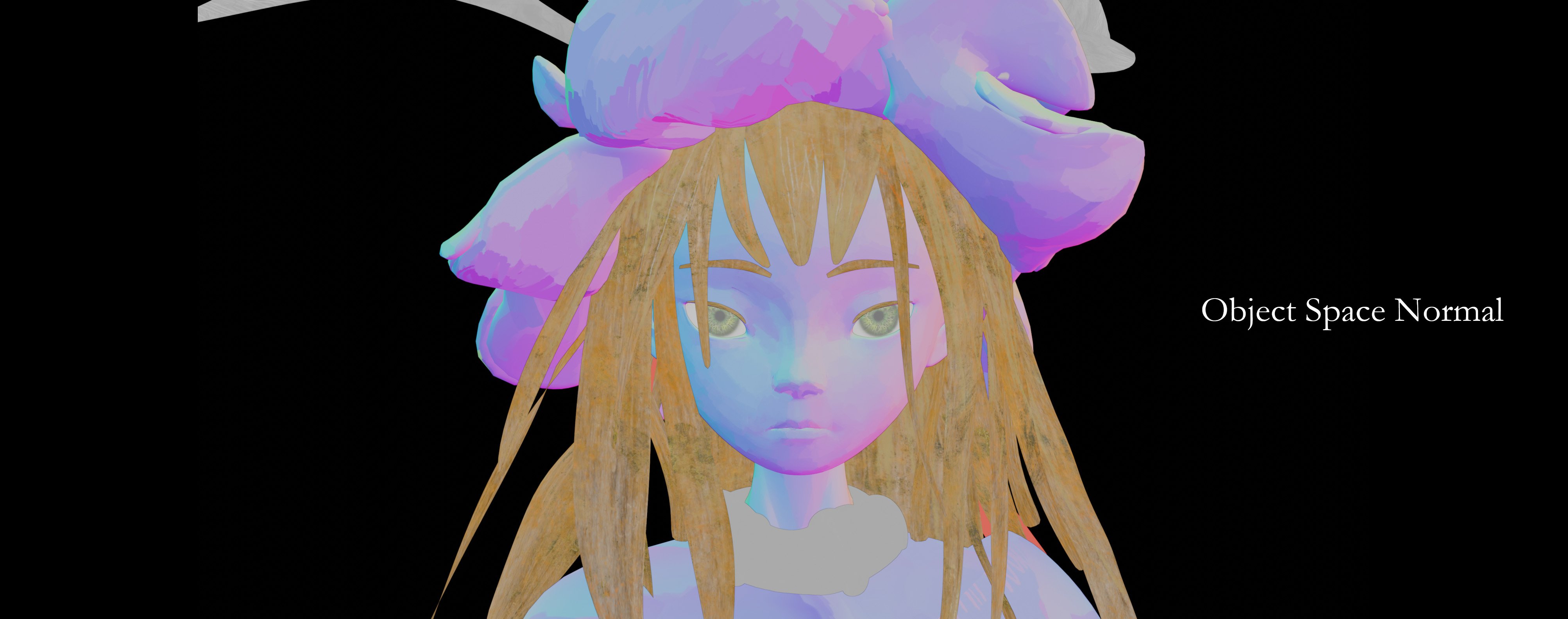
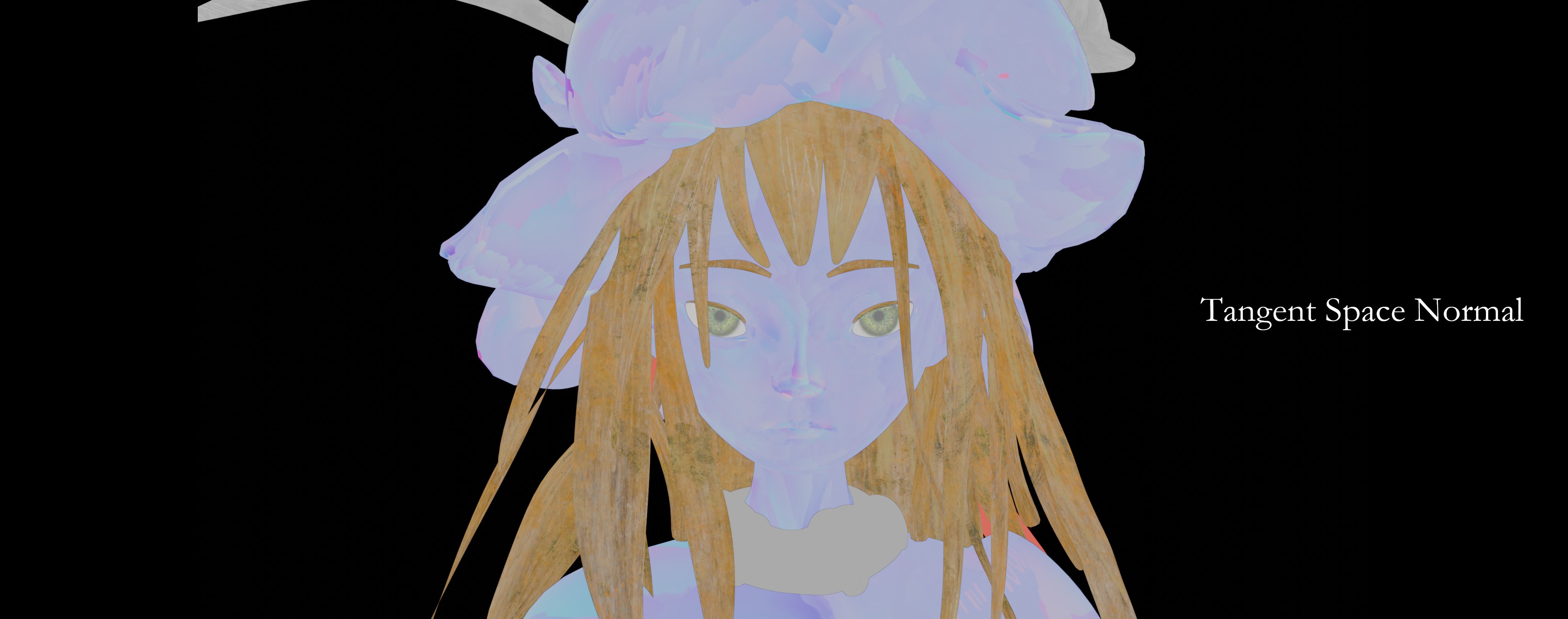
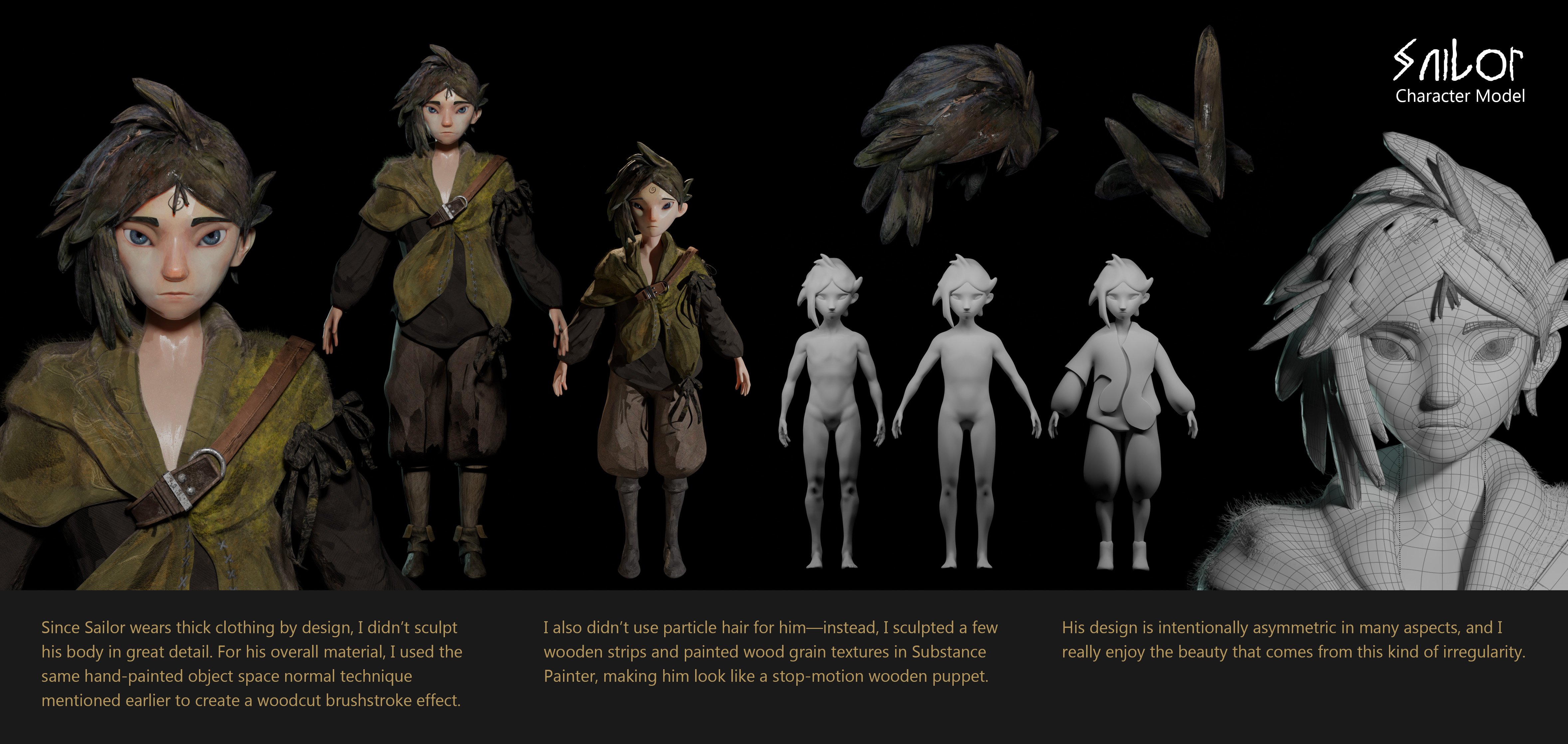
Since Sailor wears thick clothing by design, I didn’t sculpt his body in great detail. For his overall material, I used the same hand-painted object space normal technique mentioned earlier to create a woodcut brushstroke effect.
I also didn’t use particle hair for him—instead, I sculpted a few wooden strips and painted wood grain textures in Substance Painter, making him look like a stop-motion wooden puppet.
His design is intentionally asymmetric in many aspects, and I really enjoy the beauty that comes from this kind of irregularity.
Green Foxes (Lumi)
This forest is home to a species of foxes with green fur. Lumi is a little fox who is especially close to Ina and Sailor, almost like a pet.
Environment & Assets
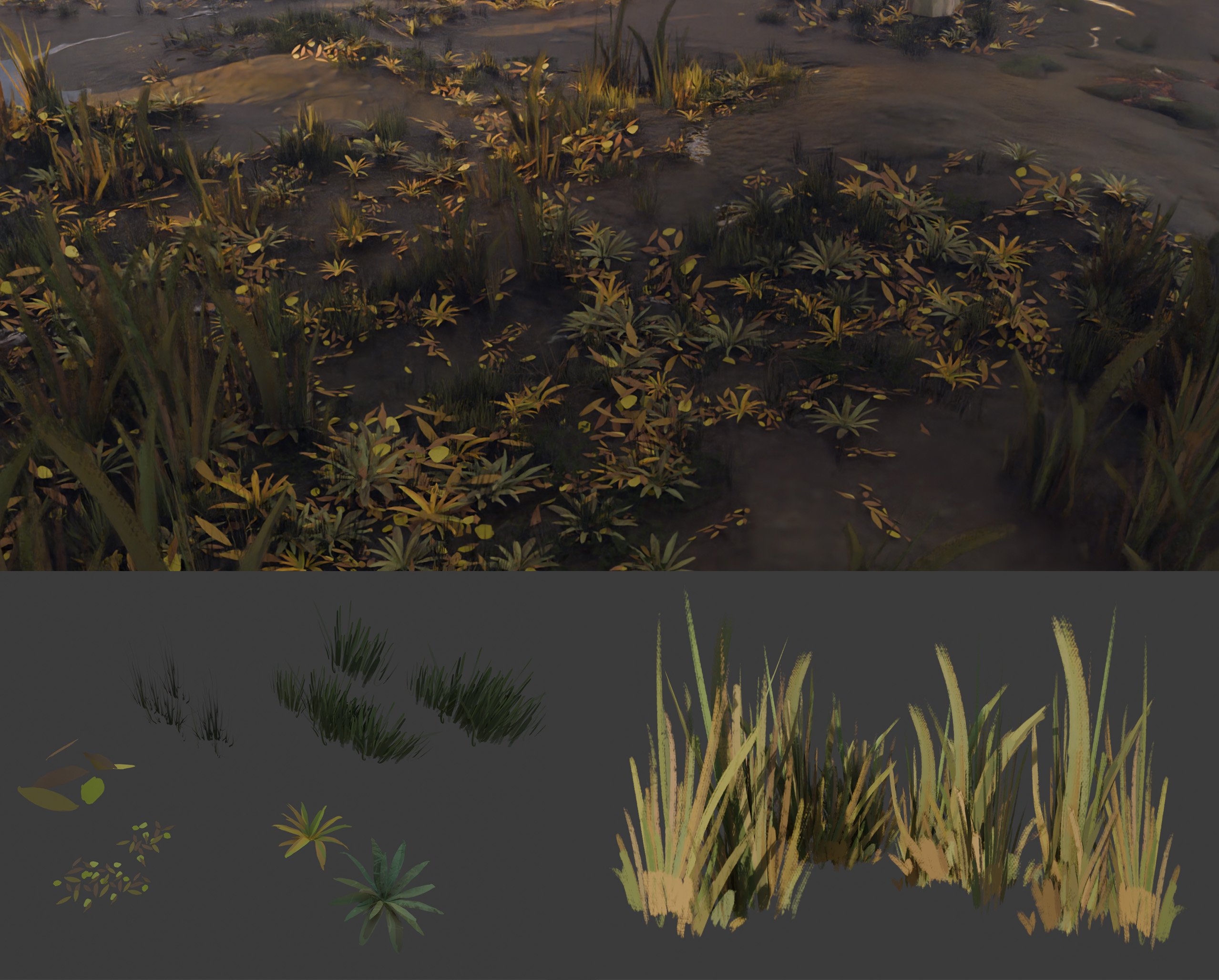
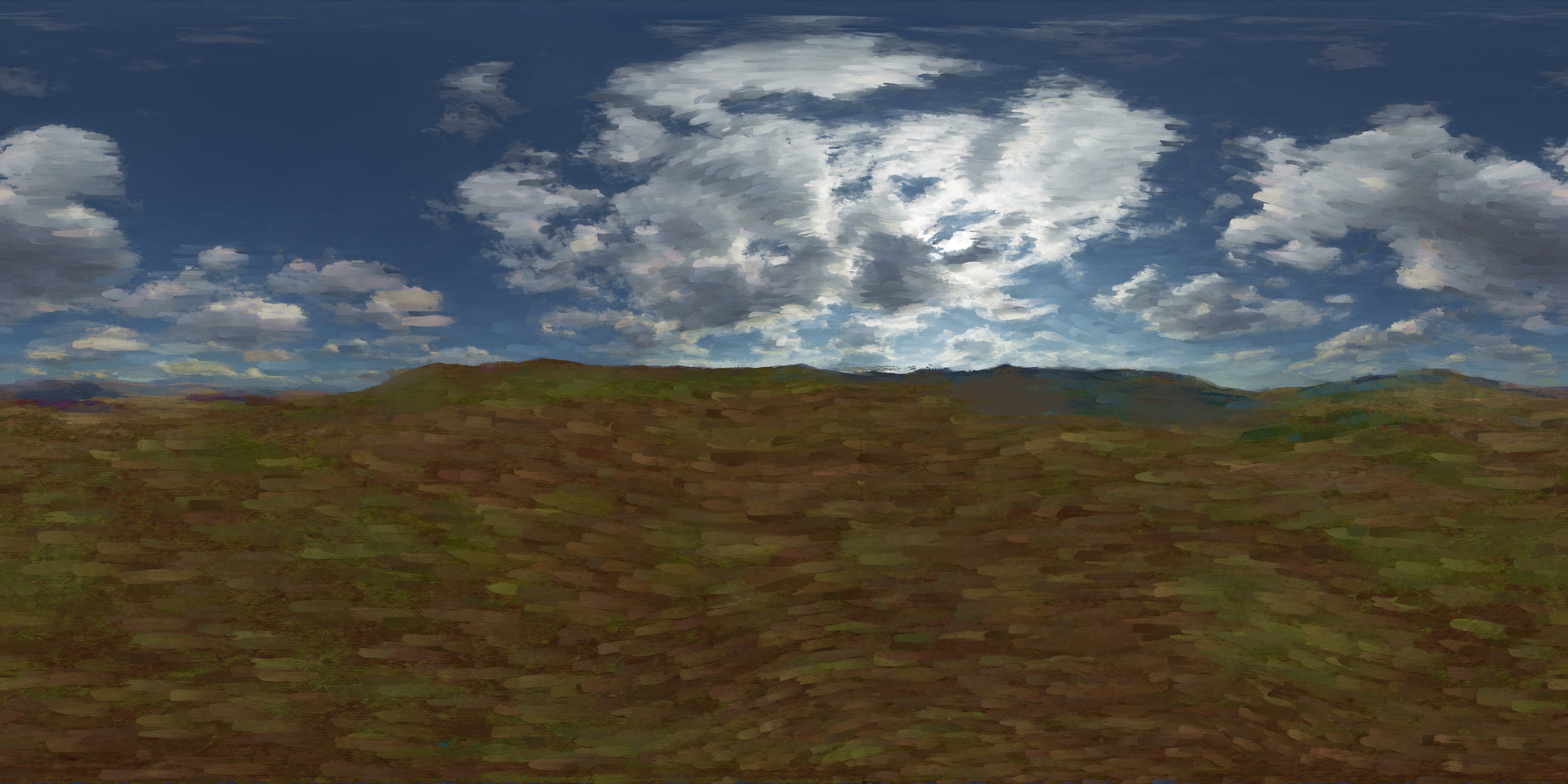
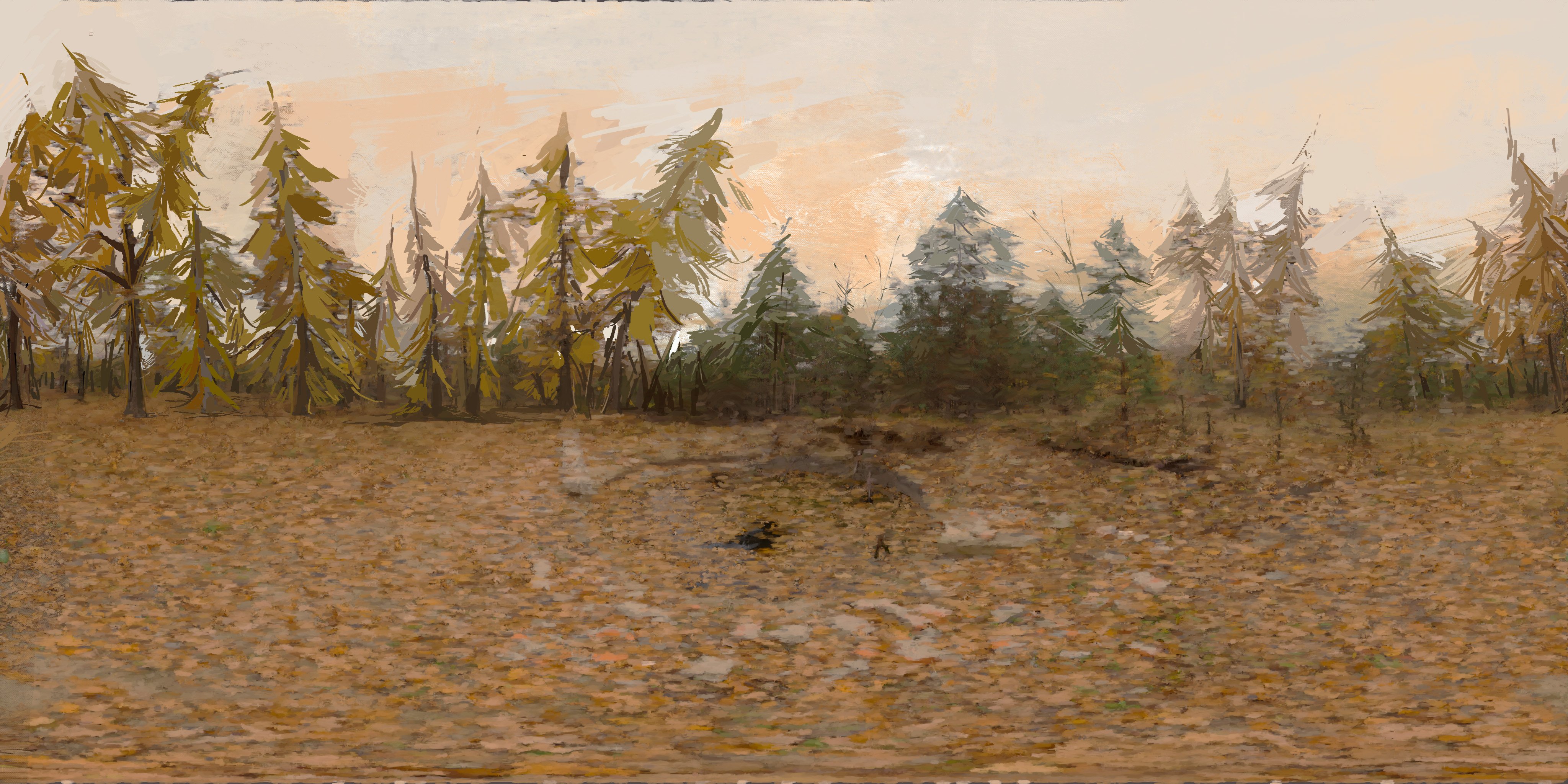
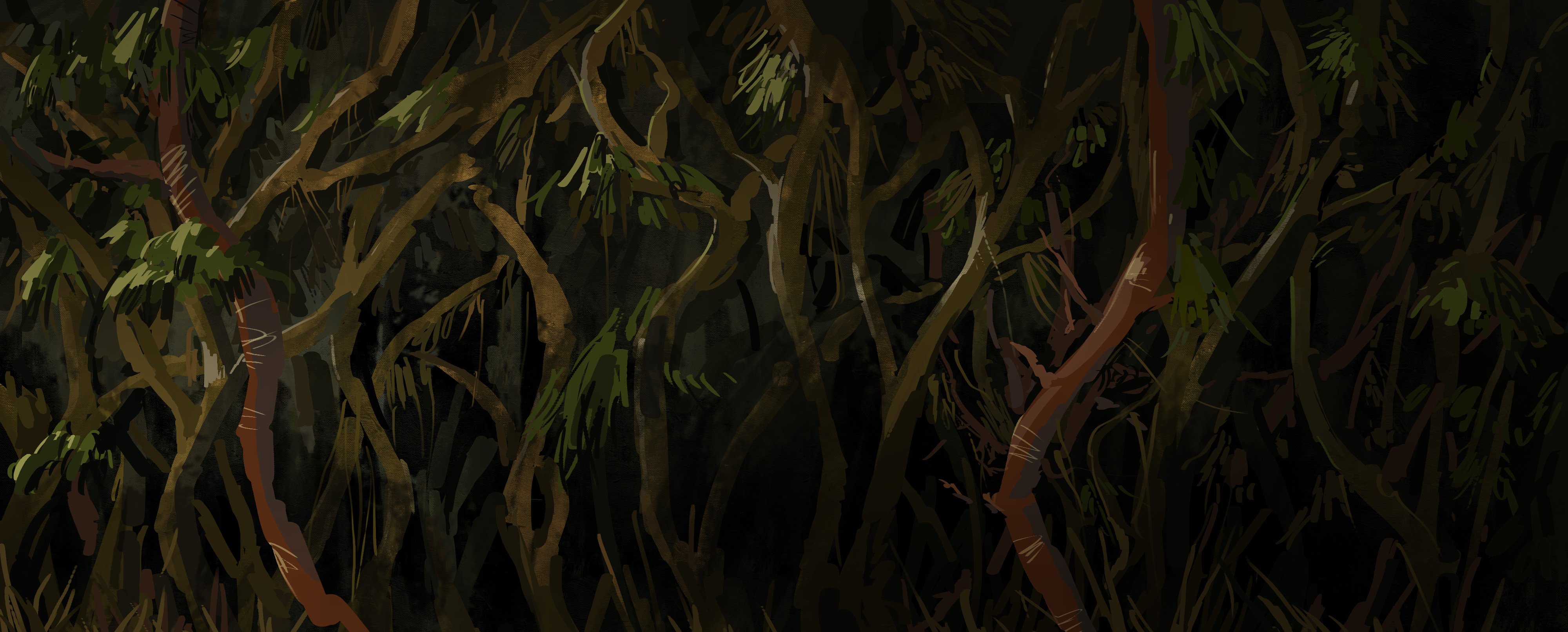
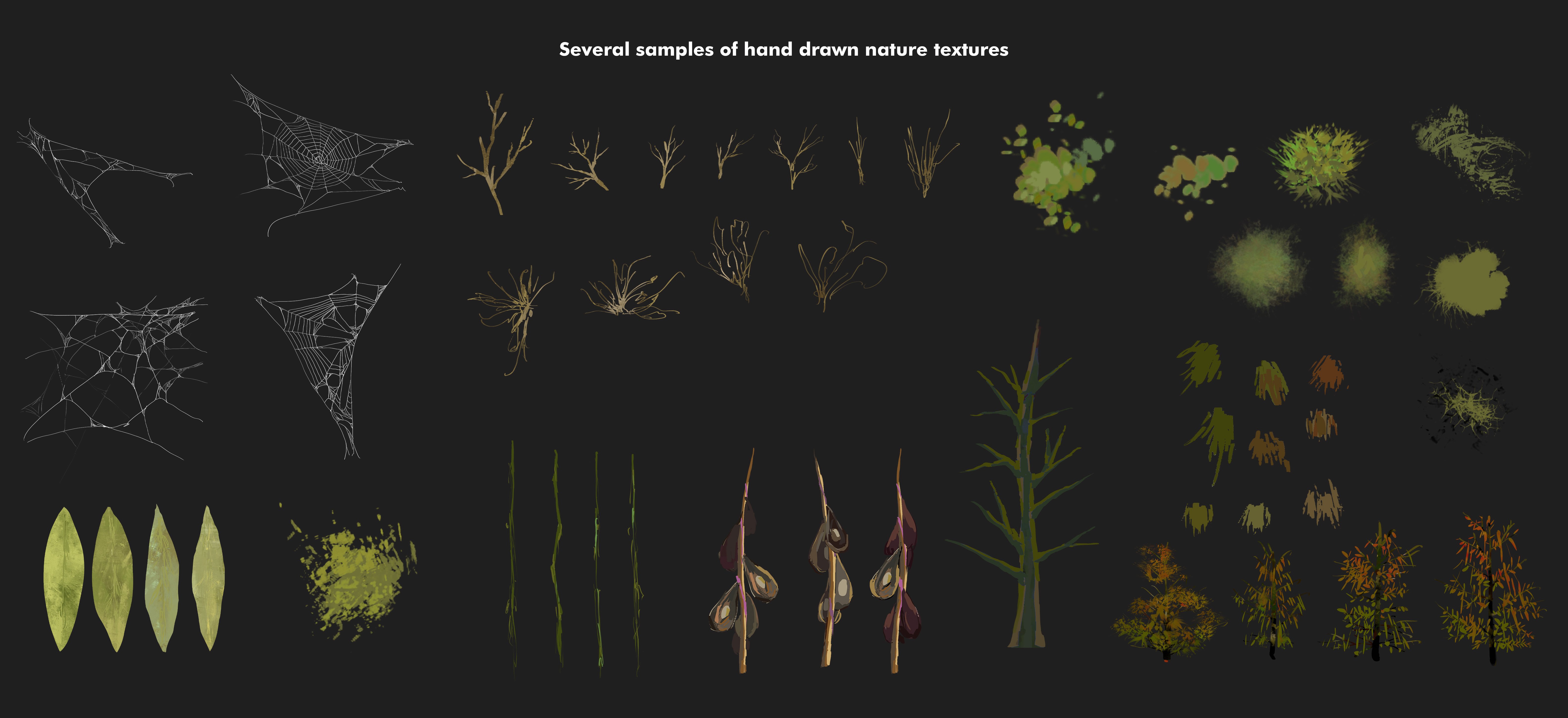
To give the film a handmade quality and avoid making it feel overly realistic, I used scanned environment assets as little as possible. Instead, I hand-painted nearly all of the environment-related assets, from individual flowers, plants, grass, and trees to the full HDRI sky sphere and distant matte paintings. As a result, the entire film has a very unified visual style.
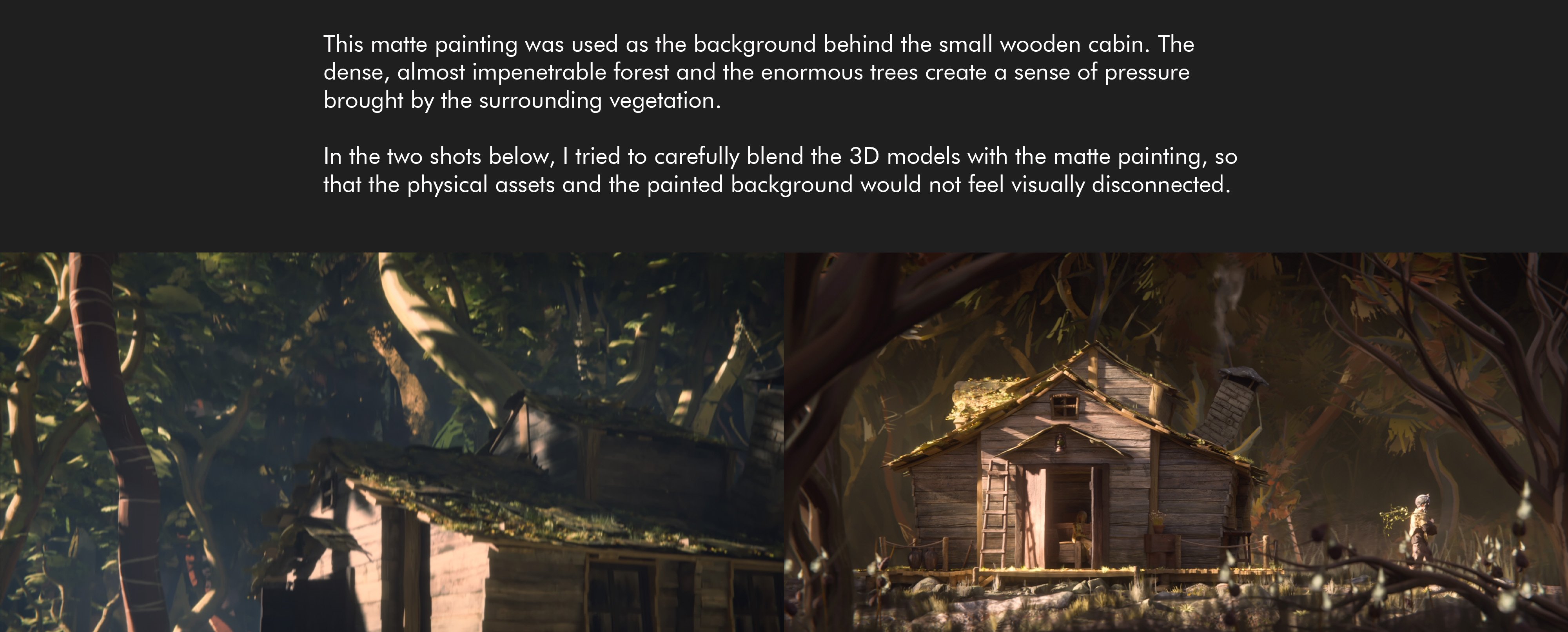
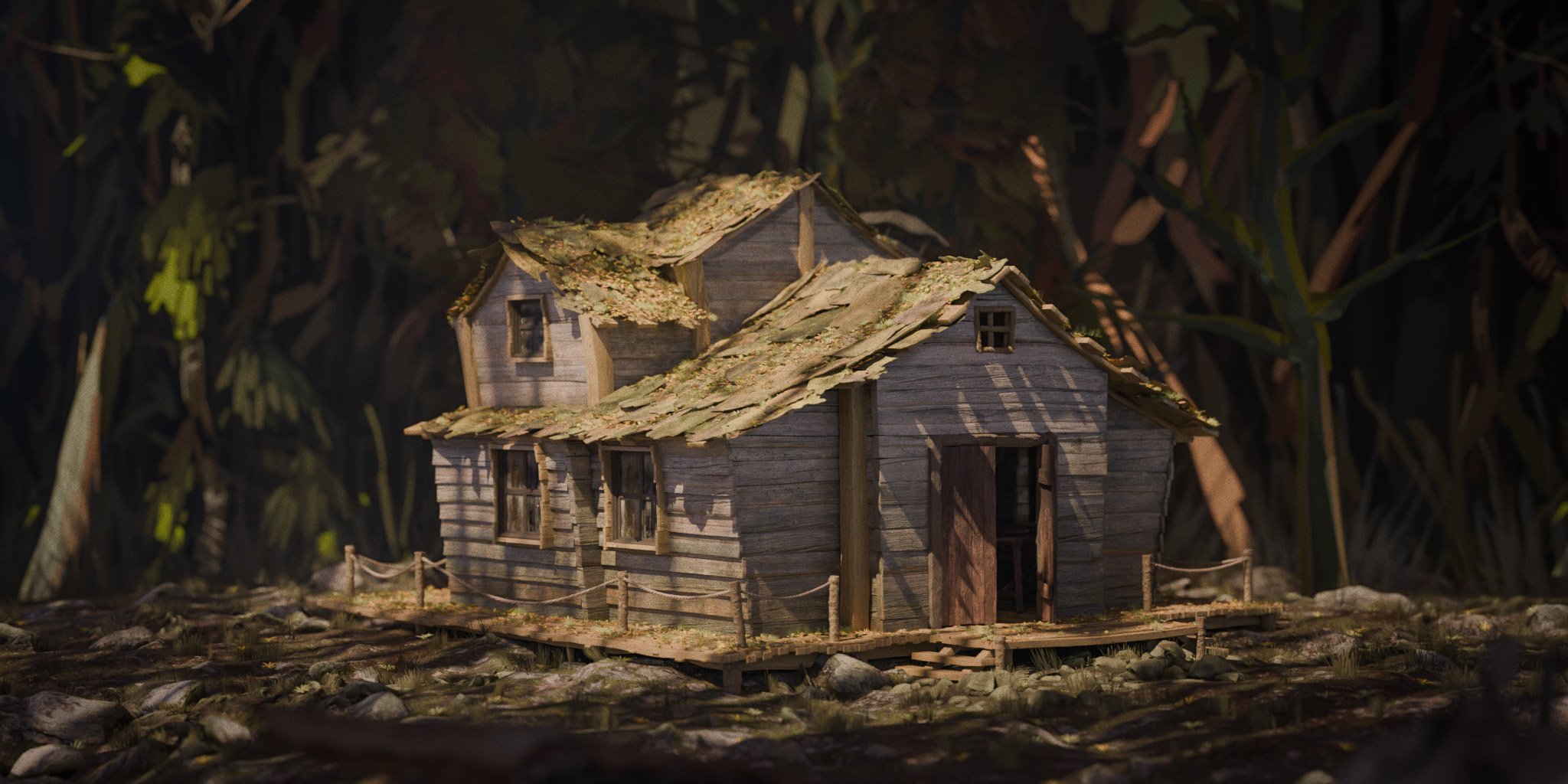
This matte painting was used as the background behind the small wooden cabin. The dense, almost impenetrable forest and the enormous trees create a sense of pressure brought by the surrounding vegetation.
In the two shots below, I tried to carefully blend the 3D models with the matte painting, so that the physical assets and the painted background would not feel visually disconnected.
Several samples of hand drawn nature textures
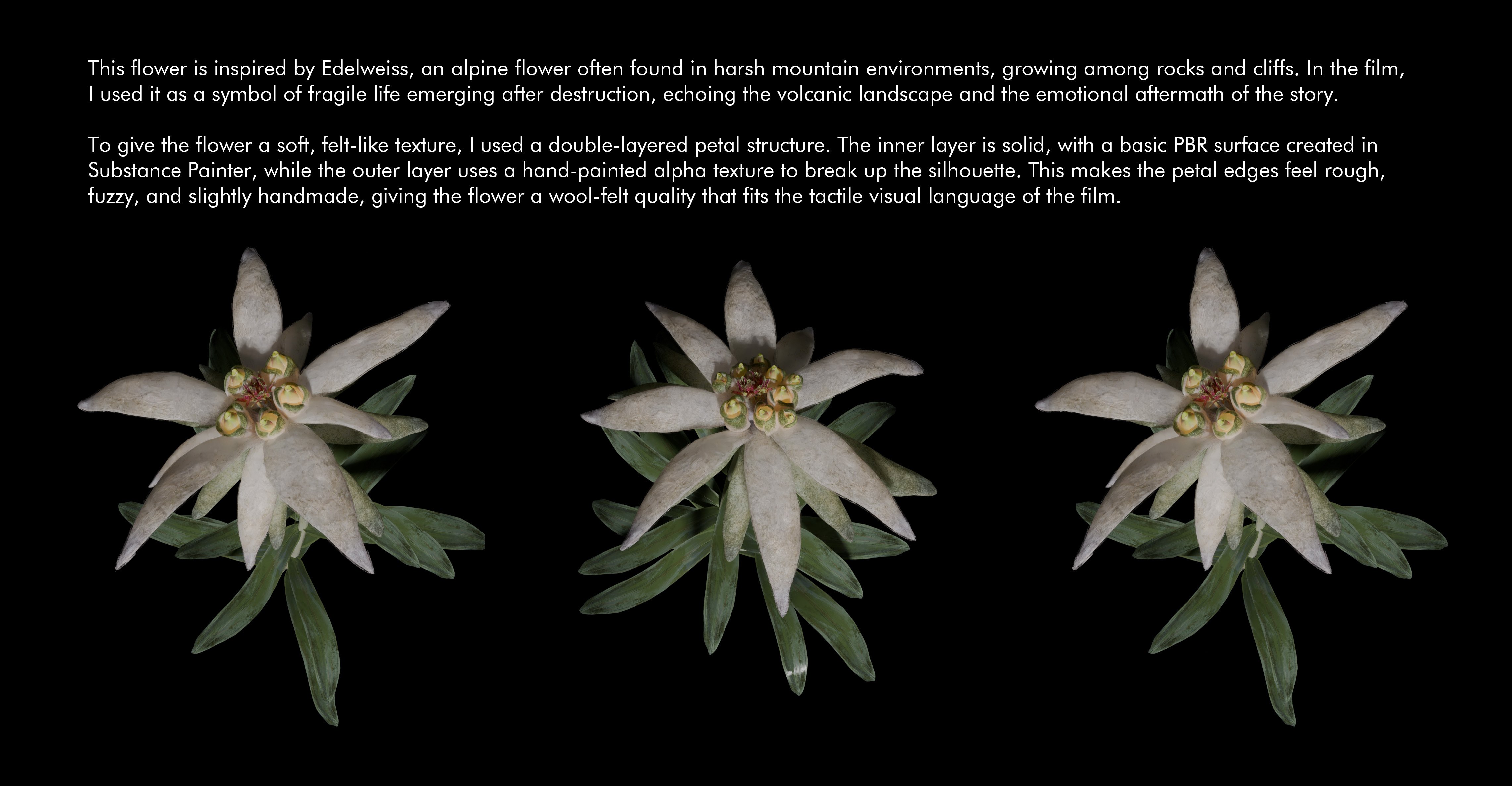
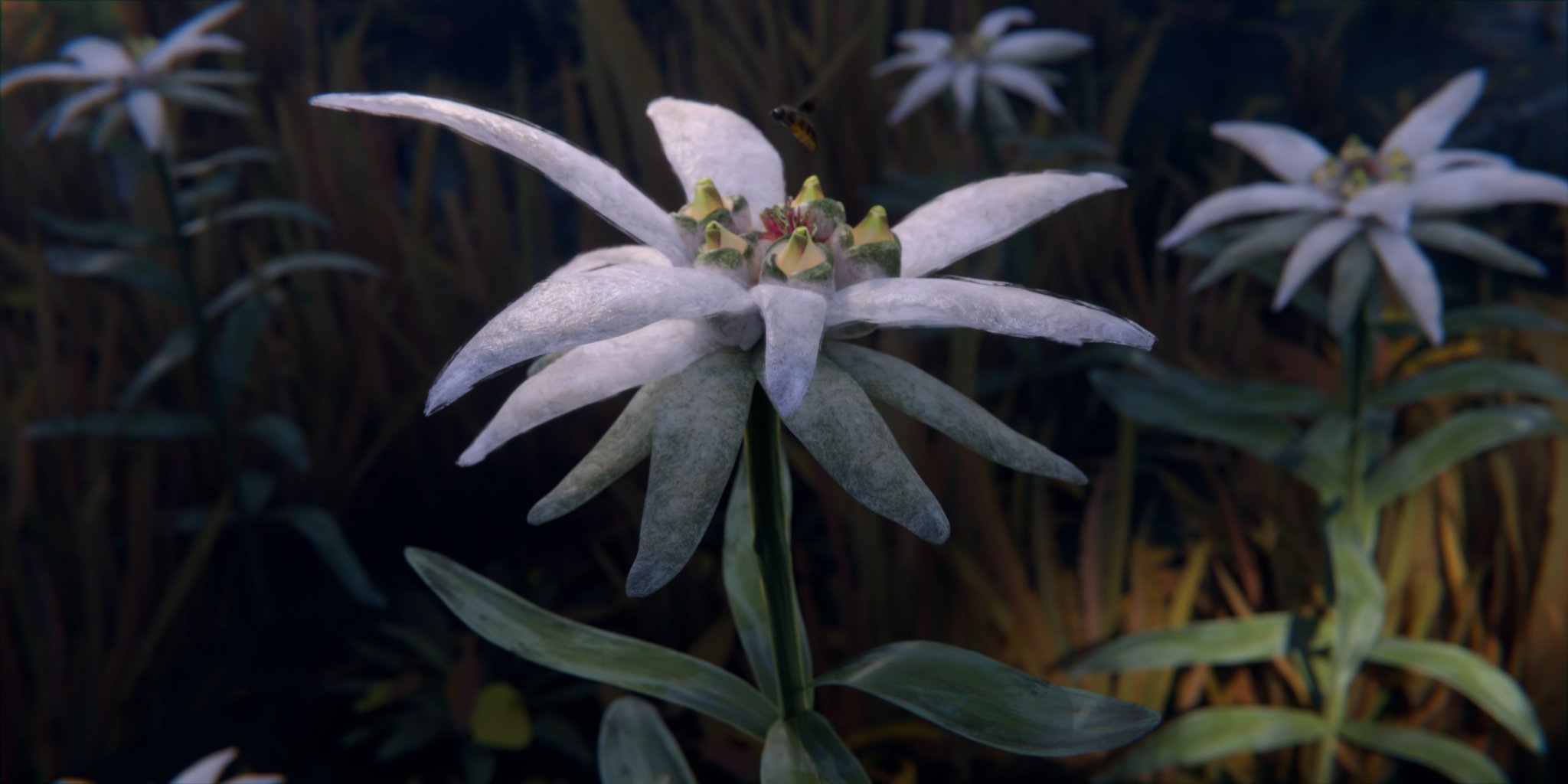
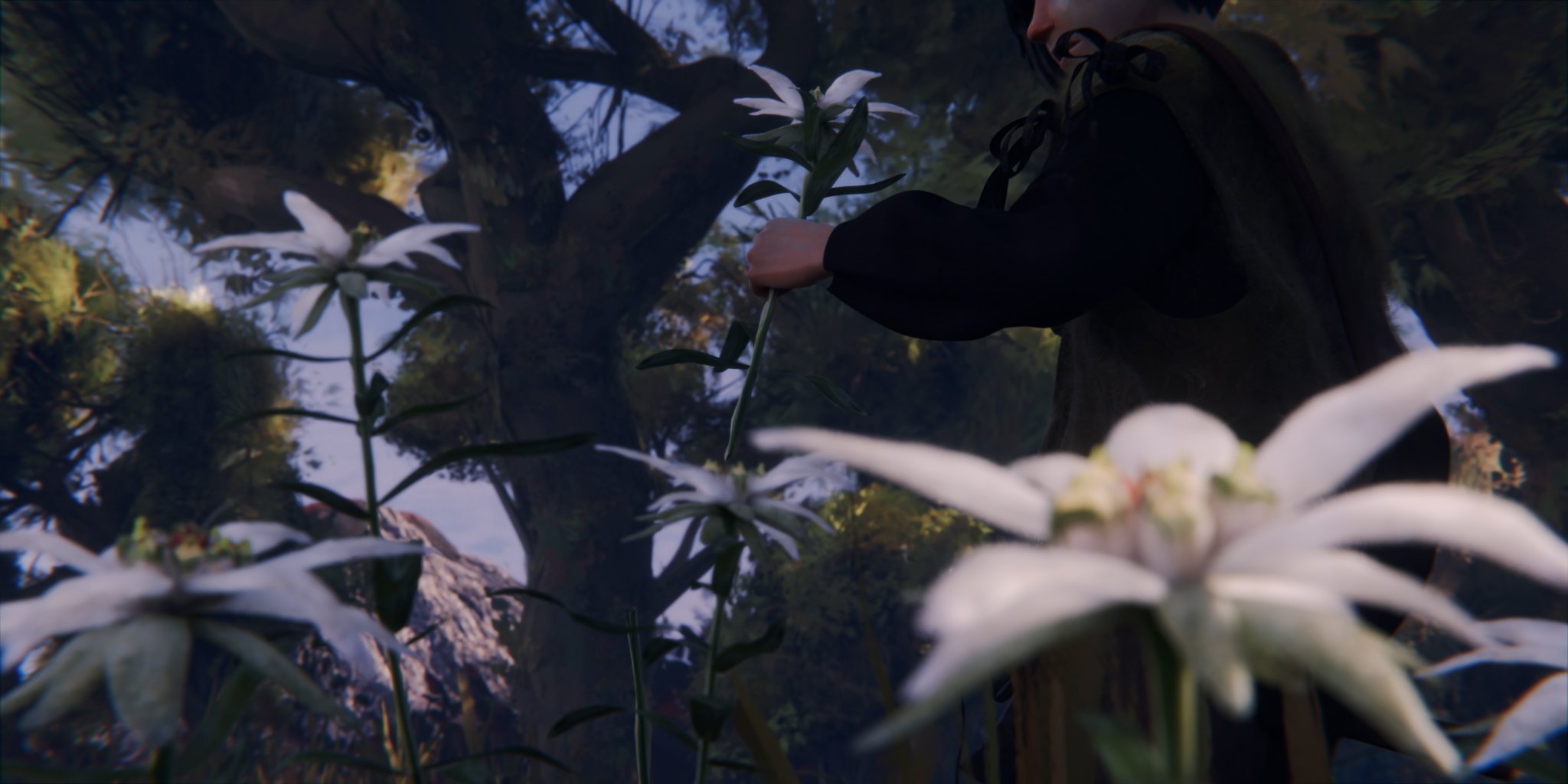
This flower is inspired by Edelweiss, an alpine flower often found in harsh mountain environments, growing among rocks and cliffs. In the film, I used it as a symbol of fragile life emerging after destruction, echoing the volcanic landscape and the emotional aftermath of the story.
To give the flower a soft, felt-like texture, I used a double-layered petal structure. The inner layer is solid, with a basic PBR surface created in Substance Painter, while the outer layer uses a hand-painted alpha texture to break up the silhouette. This makes the petal edges feel rough, fuzzy, and slightly handmade, giving the flower a wool-felt quality that fits the tactile visual language of the film.
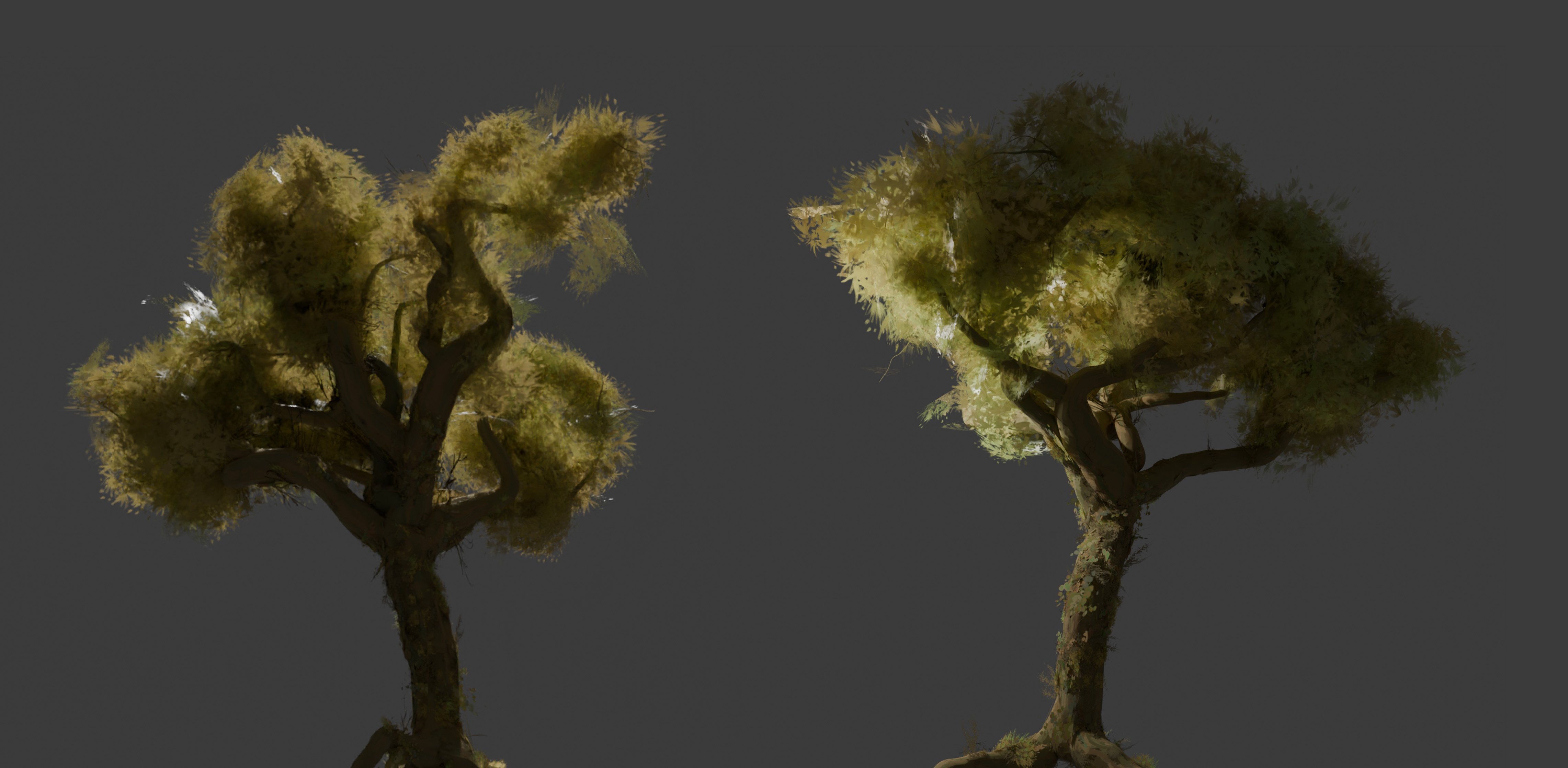
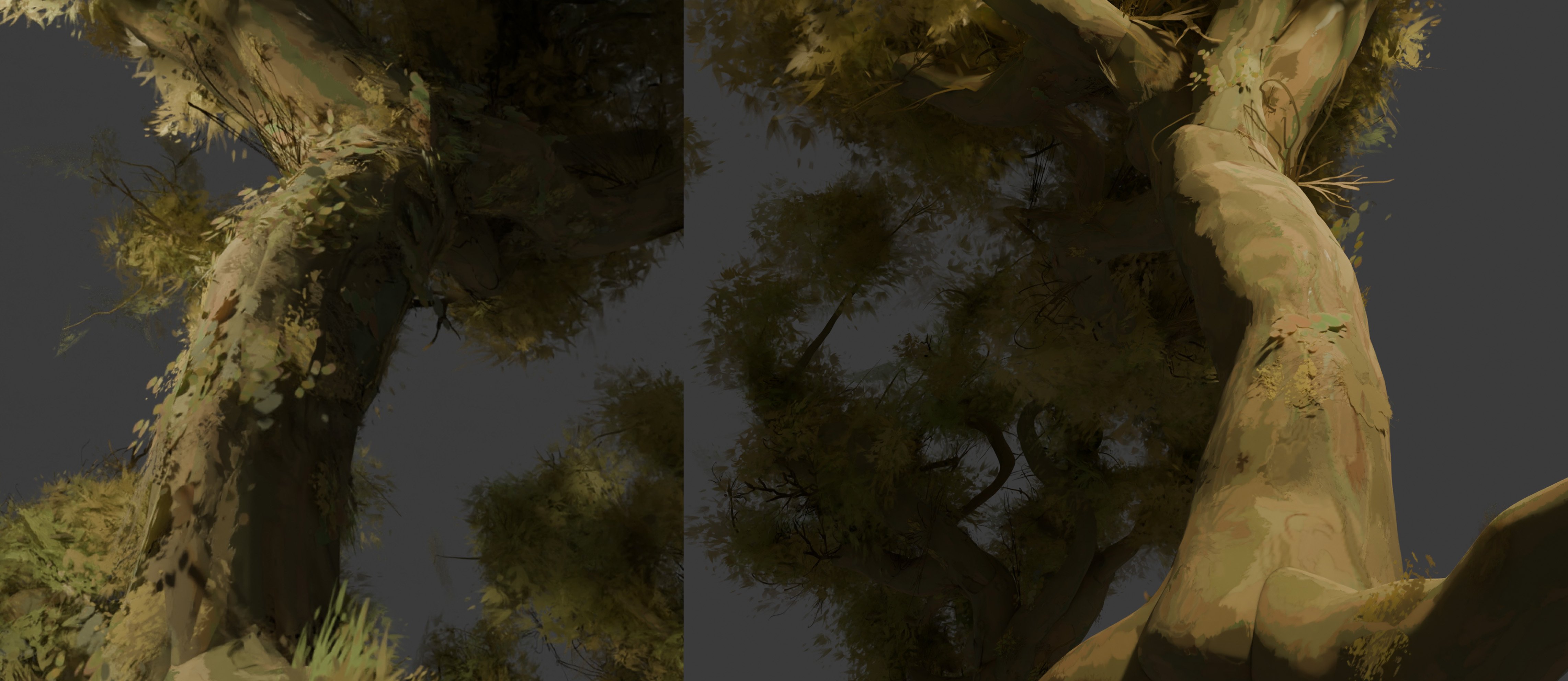
The trees in the film were created with different species and levels of detail depending on their distance from the camera and their narrative function within the shot. While background trees mainly serve the overall silhouette and atmosphere, the trees used in close-up shots required more carefully designed surface textures, leaf placement, and structural detail, so that the world could still feel tactile and believable at a closer distance.
For these close-up tree assets, I first built the main structure in AnyTree, then brought the model into ZBrush to sculpt medium and small-scale forms, as well as surface details. During the UV process, I adjusted the scale of each UV island based on how prominently each branch would appear in the shot, giving key visible areas higher texture resolution. For the material work, I combined Substance Painter and Blender to paint large color blocks and layered brushwork across the bark surface, using color variation and painterly strokes to avoid a generic procedural look. Finally, I scattered leaves, moss, and smaller branches across the trunk and main limbs, adding secondary and tertiary layers of detail to make the tree feel more organic and visually rich.
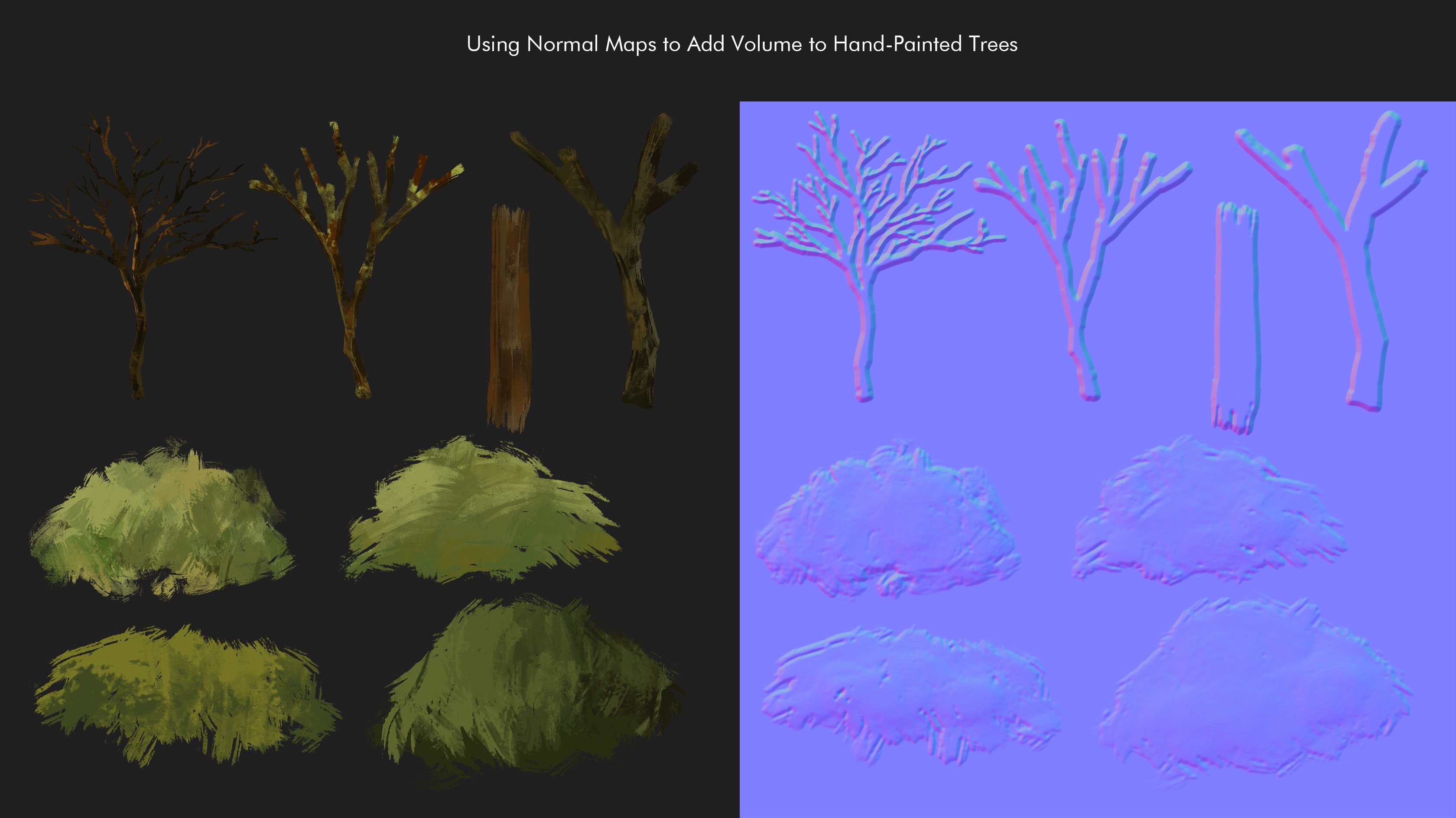
Using Normal Maps to Add Volume to Hand-Painted Trees
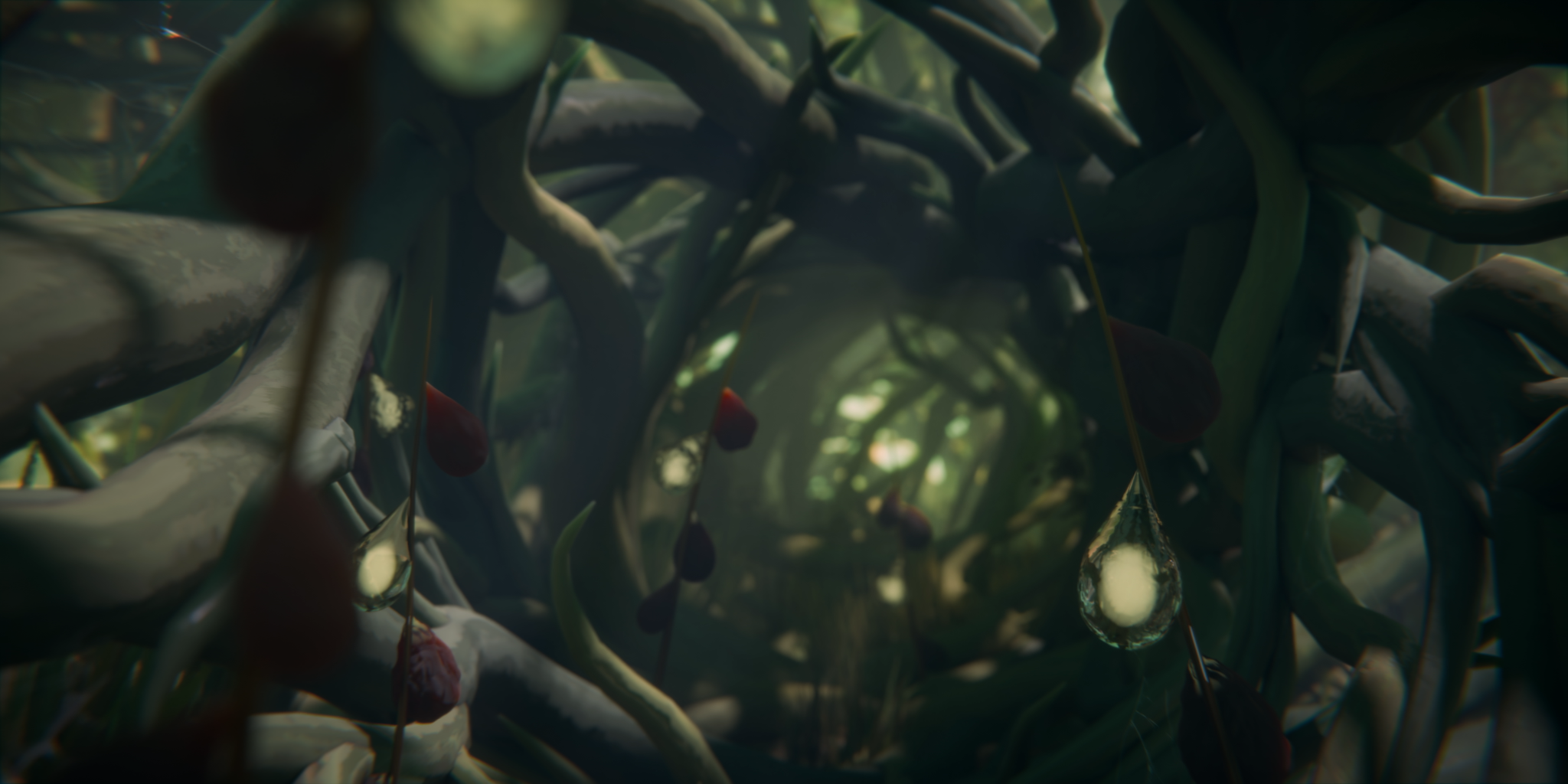
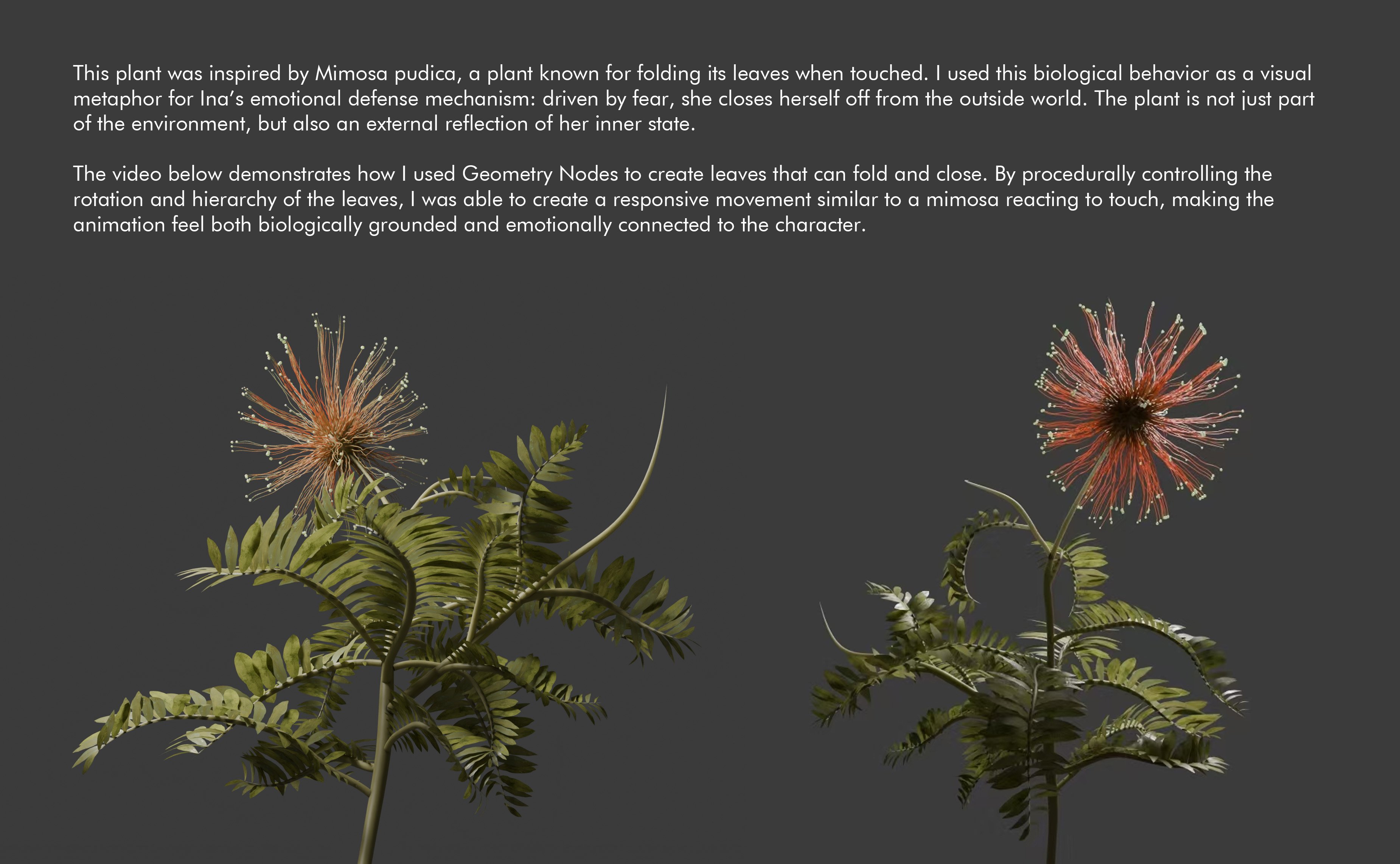
This plant was inspired by Mimosa pudica, a plant known for folding its leaves when touched. I used this biological behavior as a visual metaphor for Ina’s emotional defense mechanism: driven by fear, she closes herself off from the outside world. The plant is not just part of the environment, but also an external reflection of her inner state.
The video below demonstrates how I used Geometry Nodes to create leaves that can fold and close. By procedurally controlling the rotation and hierarchy of the leaves, I was able to create a responsive movement similar to a mimosa reacting to touch, making the animation feel both biologically grounded and emotionally connected to the character.
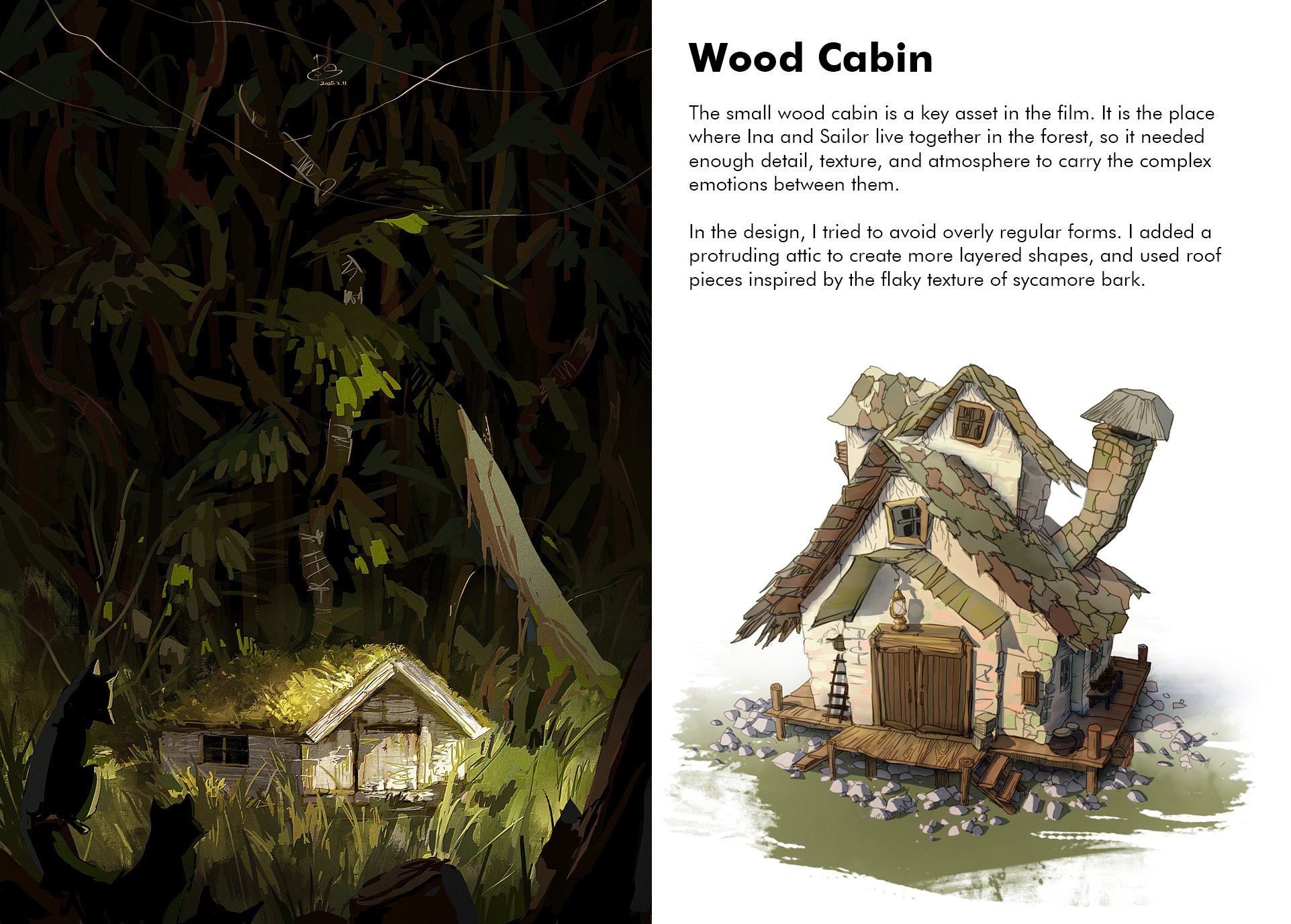
Wood Cabin
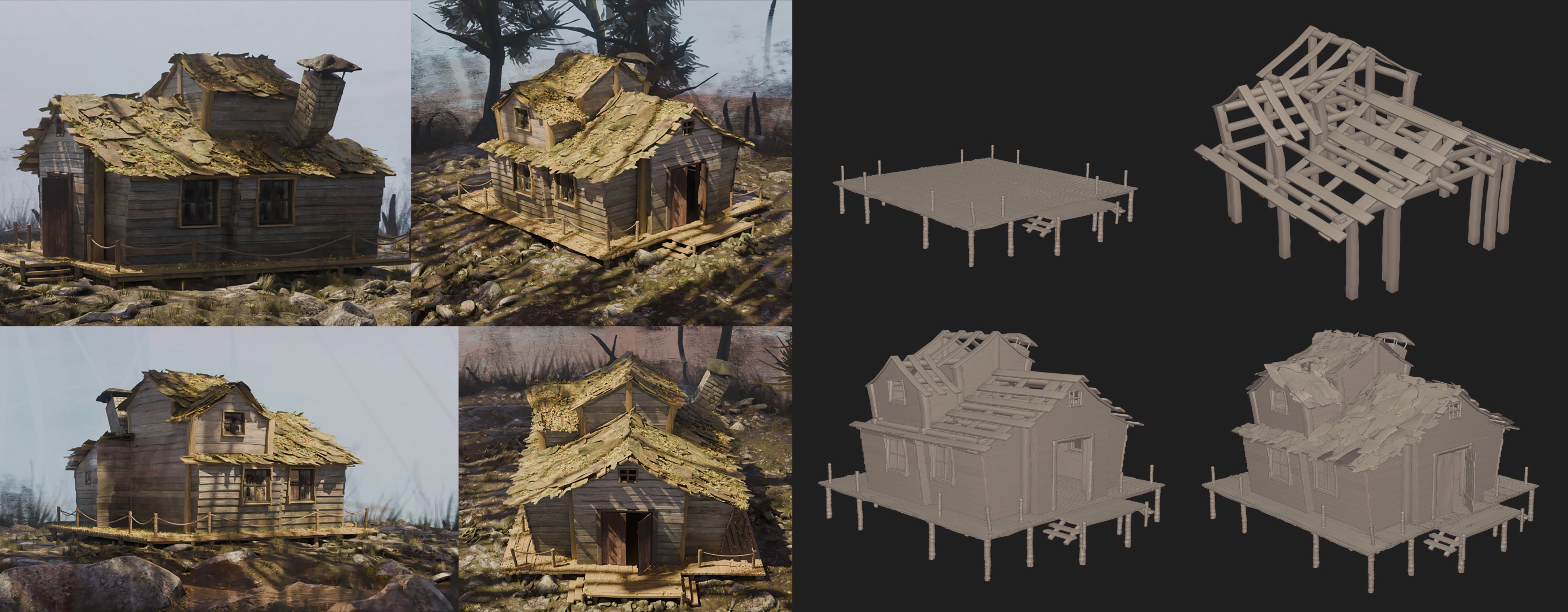
The small wood cabin is a key asset in the film. It is the place where Ina and Sailor live together in the forest, so it needed enough detail, texture, and atmosphere to carry the complex emotions between them. In the design, I tried to avoid overly regular forms. I added a protruding attic to create more layered shapes, and used roof pieces inspired by the flaky texture of sycamore bark.
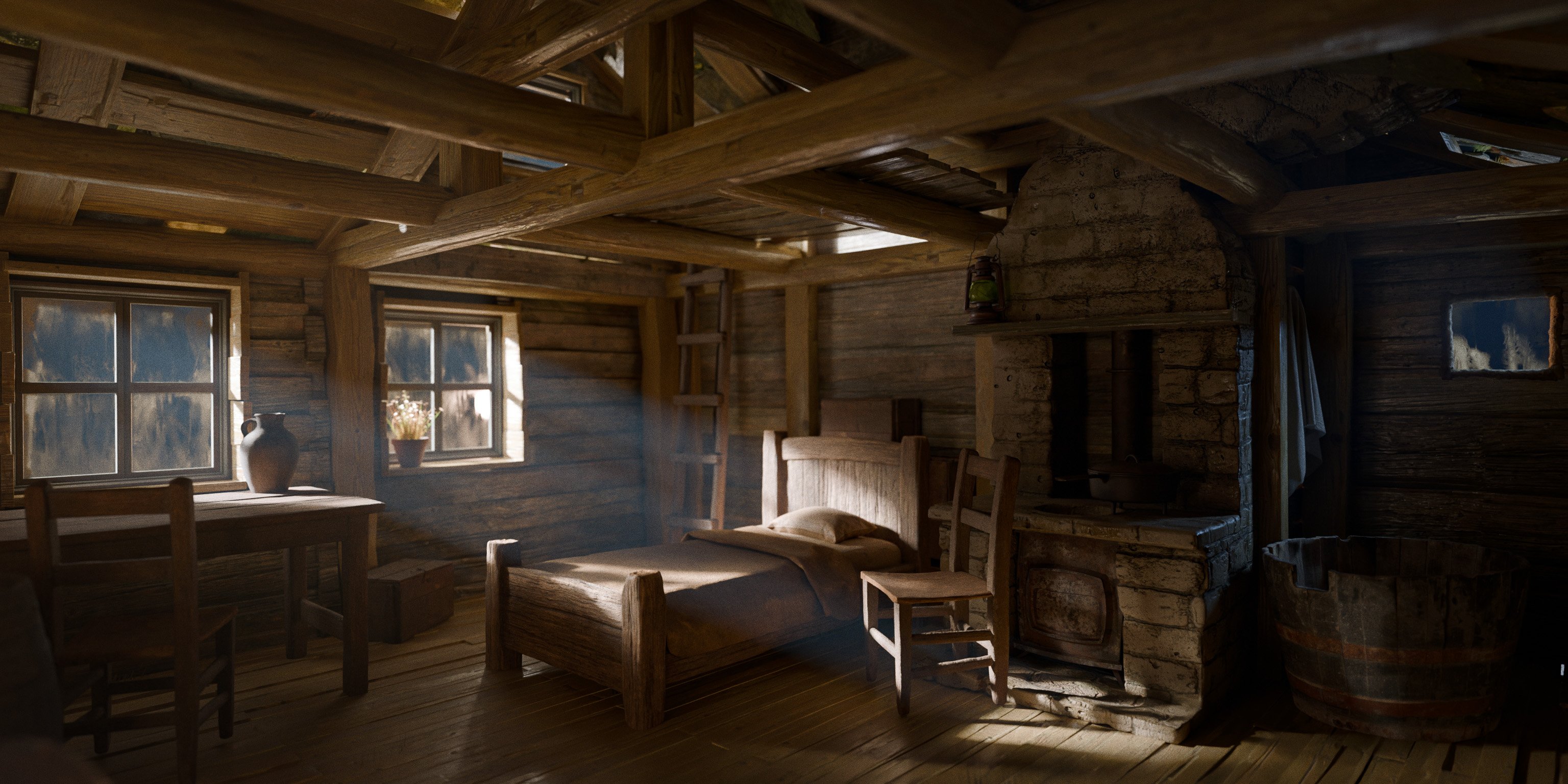
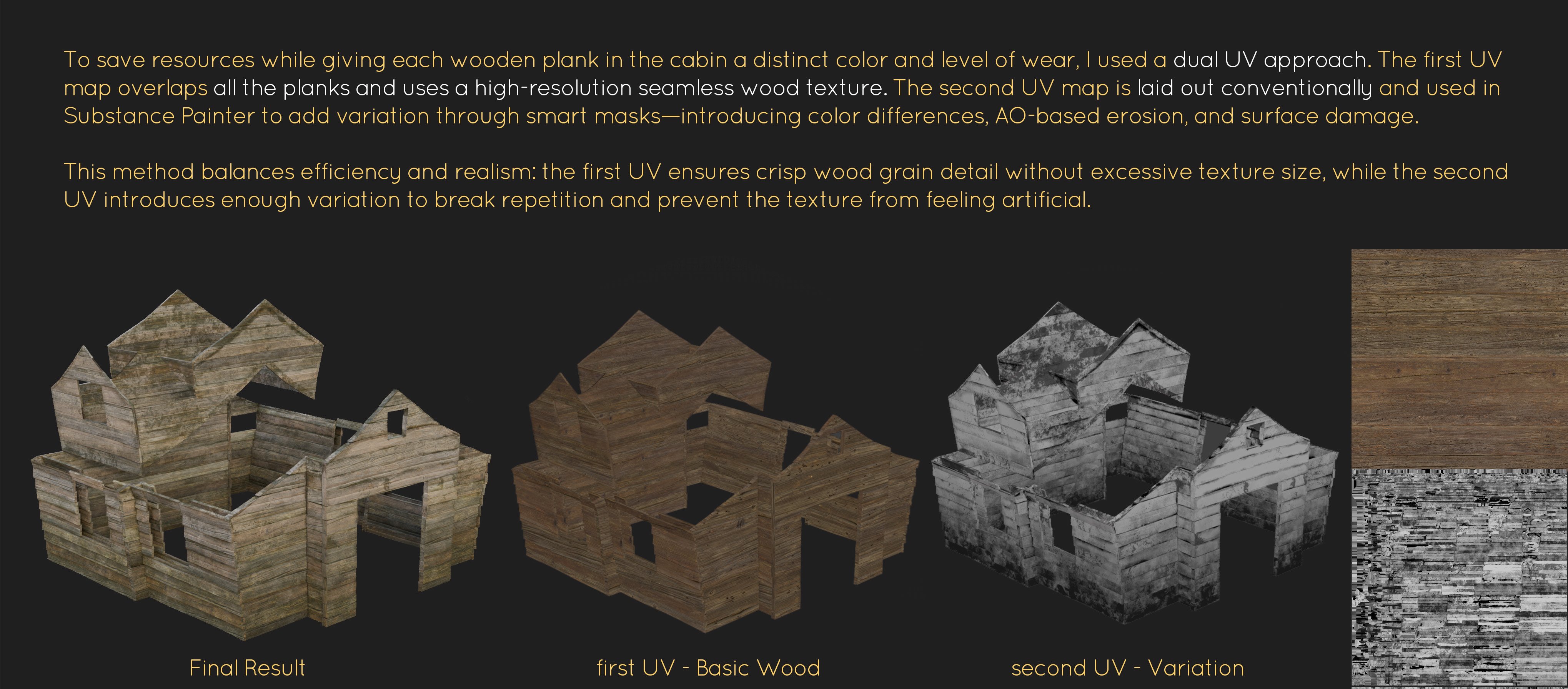
To save resources while giving each wooden plank in the cabin a distinct color and level of wear, I used a dual UV approach. The first UV map overlaps all the planks and uses a high-resolution seamless wood texture. The second UV map is laid out conventionally and used in Substance Painter to add variation through smart masks—introducing color differences, AO-based erosion, and surface damage.
This method balances efficiency and realism: the first UV ensures crisp wood grain detail without excessive texture size, while the second UV introduces enough variation to break repetition and prevent the texture from feeling artificial.
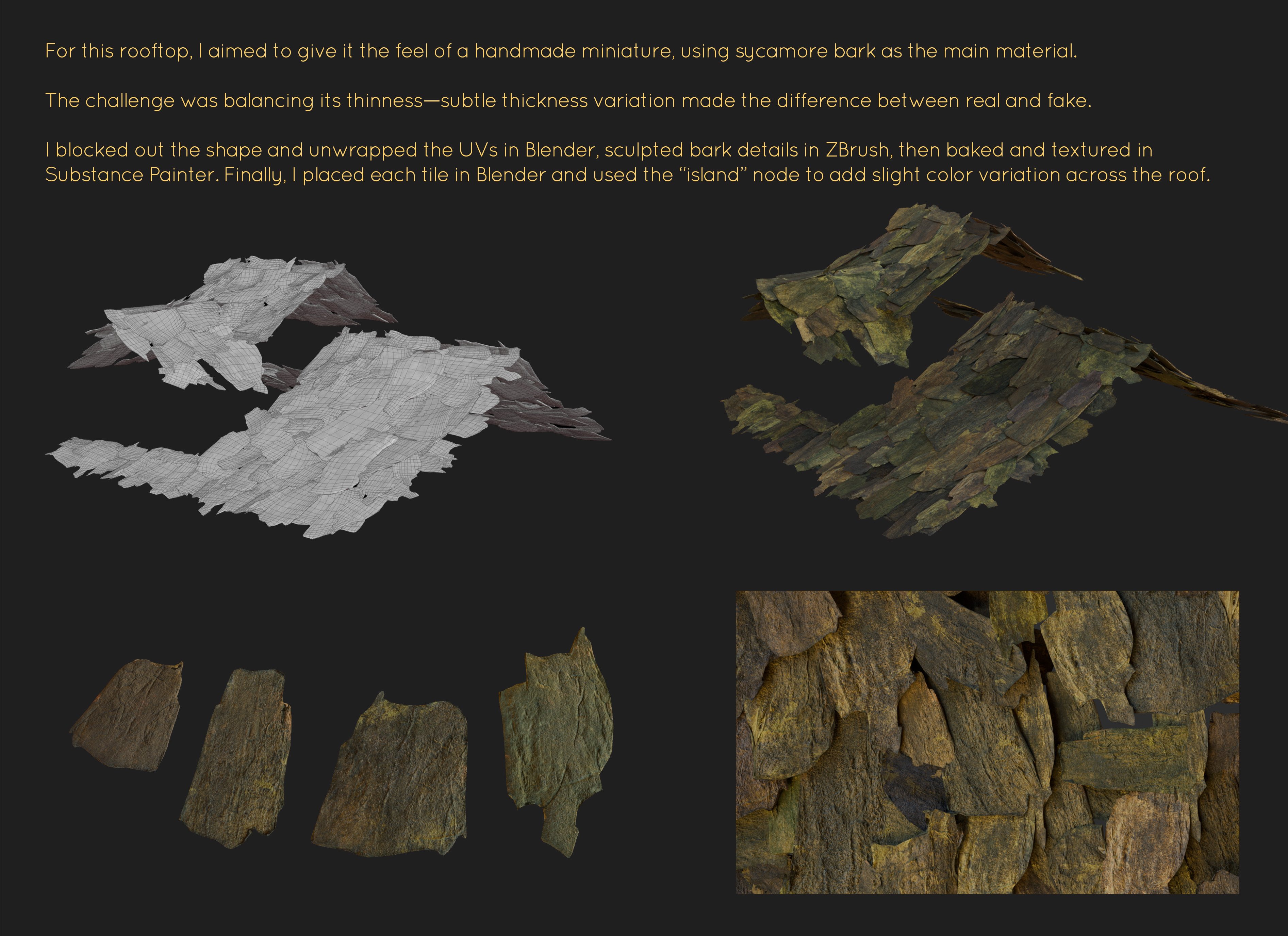
For this rooftop, I aimed to give it the feel of a handmade miniature, using sycamore bark as the main material.
The challenge was balancing its thinness—subtle thickness variation made the difference between real and fake.
I blocked out the shape and unwrapped the UVs in Blender, sculpted bark details in ZBrush, then baked and textured in Substance Painter. Finally, I placed each tile in Blender and used the “island” node to add slight color variation across the roof.
Lighting & Compositing
To maintain a sense of immersion and presence within such a stylized world, I paid close attention to warm and cool color contrast in the lighting, as well as the thematic color palette of each environment. I wanted the images to have the delicate, painterly texture of Andrew Wyeth’s oil paintings. For compositing, I often used the Mist pass and Z pass to separate the distant background elements and manually control the depth of the image. This approach was often much more effective than simply adding heavy volumetric fog or strong depth of field. Depending on the needs of each shot, I also added glow and lens distortion to enhance the cinematic quality of the image, which helped make the visuals feel softer and more pleasing to look at.
Character Animation
The visual language of the film is subtle and restrained, so the character animation also follows a slower and more understated rhythm. Instead of relying on exaggerated gestures, I focused on micro-movements, facial nuance, and small shifts in timing to carry the emotional performance. After the layout stage, I recorded my own video references for each shot, then moved into blocking and polish, carefully refining the animation curves to preserve both naturalness and emotional specificity.
Visual Effects
Visual effects play an important role in carrying and amplifying the emotional intensity of the film. Rather than using VFX purely for spectacle, I treated them as a way to make the characters’ internal states visible through the environment. The film includes effects across many different scales: from a few drops of coughed-up blood, boiling water, a burning forest, and flowing lava, to violent volcanic eruptions, falling volcanic rocks, and the more abstract, stream-of-consciousness form of the Fox Spirit. Together, these effects create an emotional hierarchy within the film. The smaller effects stay close to the body, emphasizing fragility and physical vulnerability, while the larger natural disasters externalize fear, trauma, and loss of control across the entire landscape.
Below is an example of my hybrid approach to volumetric effects, combining rendered video textures with real volume elements. I first simulated the original effect in Embergen and rendered it out as footage. Then, instead of using the full simulation directly in every shot, I applied the rendered sequence as an animated texture onto a simple piece of geometry. This allowed me to preserve the organic motion and complexity of the simulation while keeping the scene lighter, more controllable, and easier to art direct.
Fox Spirit is the physical manifestation of Ina’s fear. It first appears after she runs into the volcanic ash, taking the form of a fox head with trailing tail-like shapes and dark smoke, like a hallucination formed from fear and disaster. Later, when Ina enters the crater and sees new plants growing across the landscape, the dark smoke disappears and the form becomes clearer and cleaner, reflecting her changing relationship with fear.
For the production, I first modeled a fox mask as the base mesh. I then created the trailing effect in Houdini and scattered the trail points across the mask surface to generate multiple tail-like forms. Noise displacement was added to make the shapes feel more random and stream-of-consciousness. Finally, I created the dark smoke in Embergen to give the first appearance a stronger sense of pressure and instability.
This shot shows Sailor making medicine for Ina near the beginning of the film, foreshadowing the later moment when the medicine accidentally harms the fox.
I simulated the liquid, bubbles, and smoke in Houdini, then added herbs and fruits in Blender and manually keyframed their random floating motion to make the surface feel more natural and alive.
This algae-covered water effect was created using Houdini Copernicus, which allowed me to simulate directly on image pixels. I processed the simulation results into base color, roughness, and displacement maps, then combined them with physical aquatic plants underneath to create the look of a pond gradually overtaken by vegetation.
Lastly, this is the title design for the film. I chose a retro, forest-inspired typeface and gave it a branch-like material. The core concept behind the title is “growth and destruction”: the dot above the letter “i” is designed as a leaf, which burns away as the title appears, hinting at the relationship between nature, trauma, and rebirth in the film.
For the production, I first designed the title as flat typography, exported it as an SVG, and extruded it into a 3D form. I then remeshed and sculpted the details in ZBrush, created the wood-grain material, and finally added the burning effect in Houdini.
Music / Scoring
In addition to the visual production, I also composed and arranged the score for the film myself. I used four notes, “La-Re-Si-Do,” as the main musical motif, and developed different variations of this theme for different emotional sections of the film. By reshaping the motif throughout the score, I wanted the music to become part of the emotional storytelling, working together with the plants, volcanic ash, character movement, and atmosphere rather than simply functioning as background music. Below is the Cubase project for one of the score pieces, “Deepest Fear.”
Thank You
Ash is the result of my attempt to bring a deeply personal world to life through a complete 3D animation pipeline. From character design, modeling, rigging, animation, look development, lighting, visual effects, compositing, to music, every part of the production was shaped around the same emotional core: a quiet story about fear, care, loss, and the possibility of healing after destruction. Throughout the film, I wanted the world to feel tactile, fragile, and alive. The plants, trees, smoke, lava, and small character gestures are not just visual details, but extensions of the characters’ inner states. Ina’s fear, Sailor’s care, and the landscape’s cycle of growth and destruction are all reflected through the materials, movement, and atmosphere of the film. For me, Ash is not only a thesis film, but also a major step in developing Floraspira as a long-term artistic world. It allowed me to combine my roles as a director, animator, 3D generalist, and composer into one unified piece. More importantly, it helped me understand the kind of animation I want to make: work that is technically detailed, emotionally restrained, and rooted in a strong sense of place, memory, and inner life. I would also like to give special thanks to Haoyue Xu, whose contribution was essential to the development of the film’s visual language. She supported the project through visual development, stylized 3D modeling, and look development research, and her feedback helped me refine the tactile, handcrafted quality of the world. As both a collaborator and a close creative partner, she played an important role in helping Ash become the film it is today. -Zeming Sun Director of Floraspira: Ash